How It Shows Up
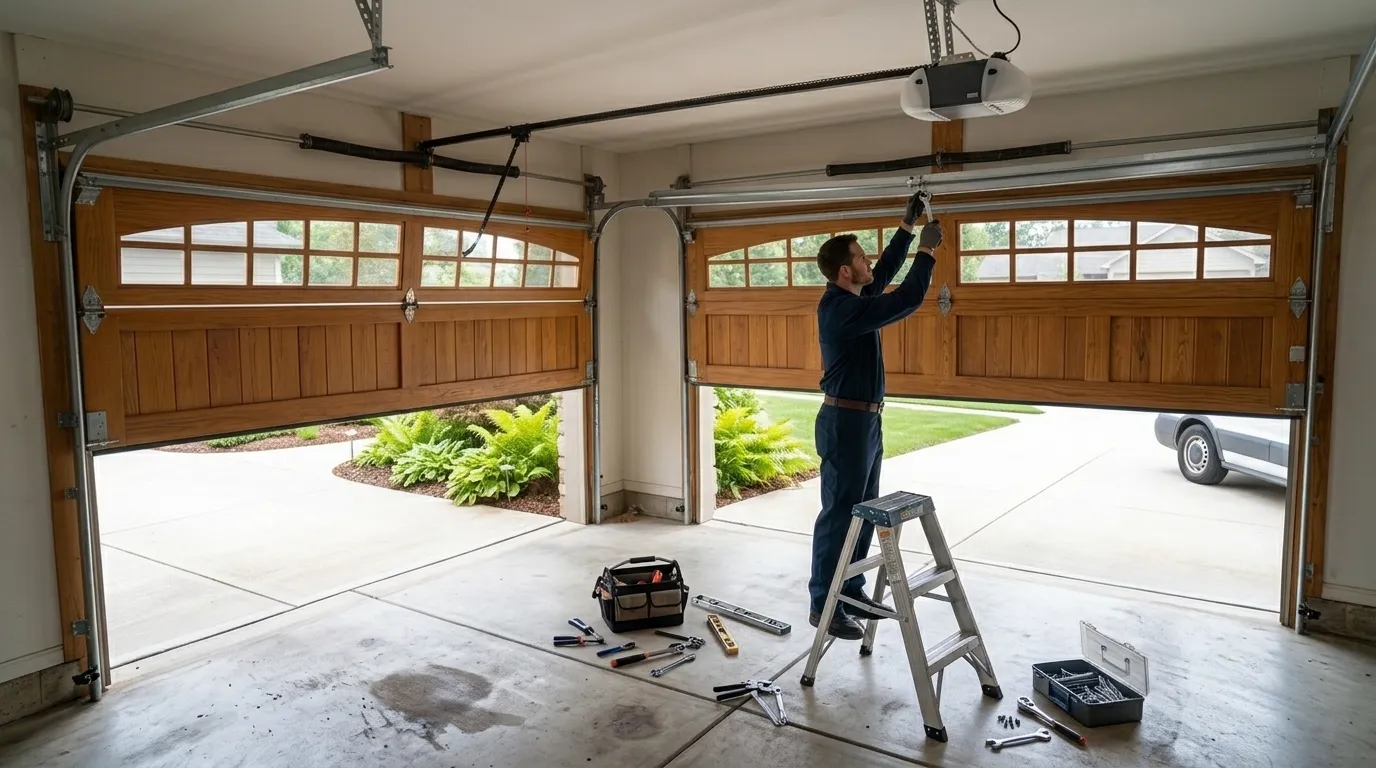
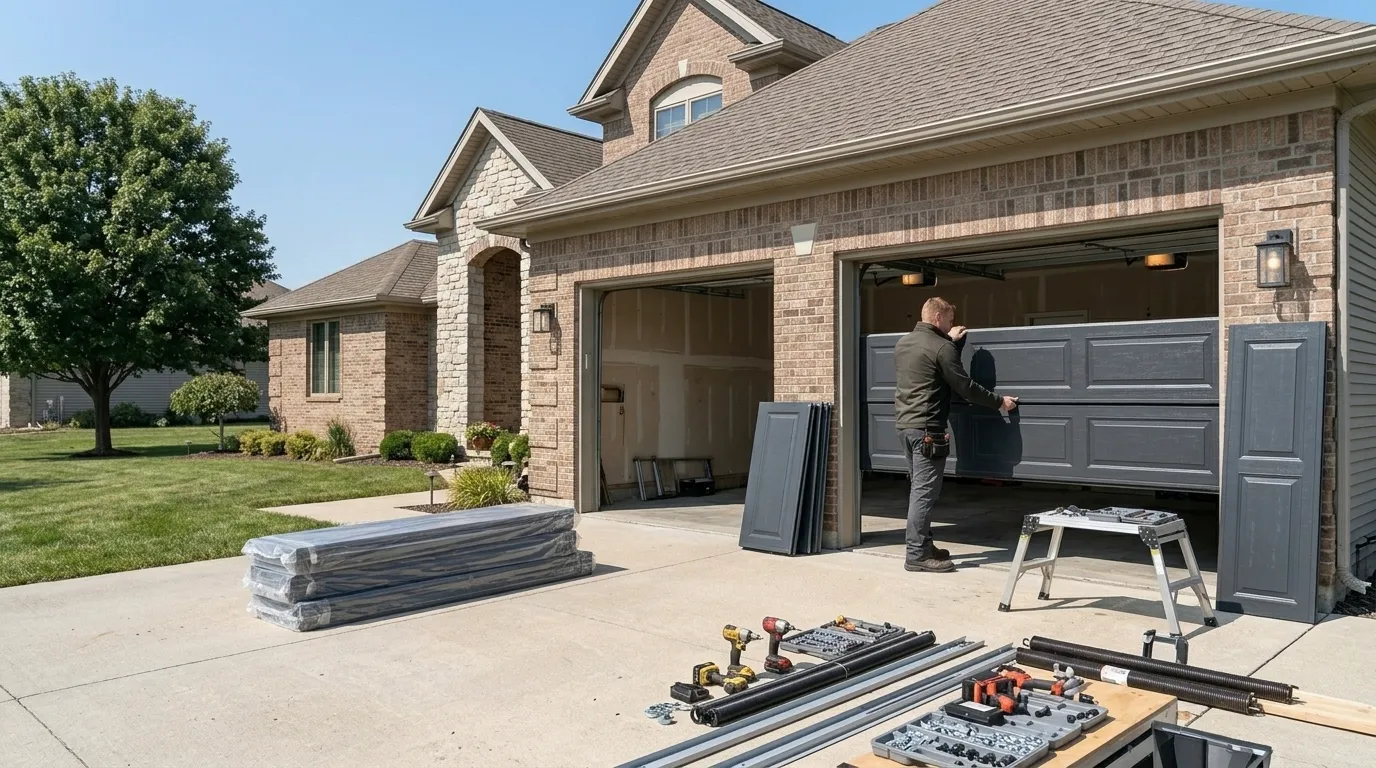
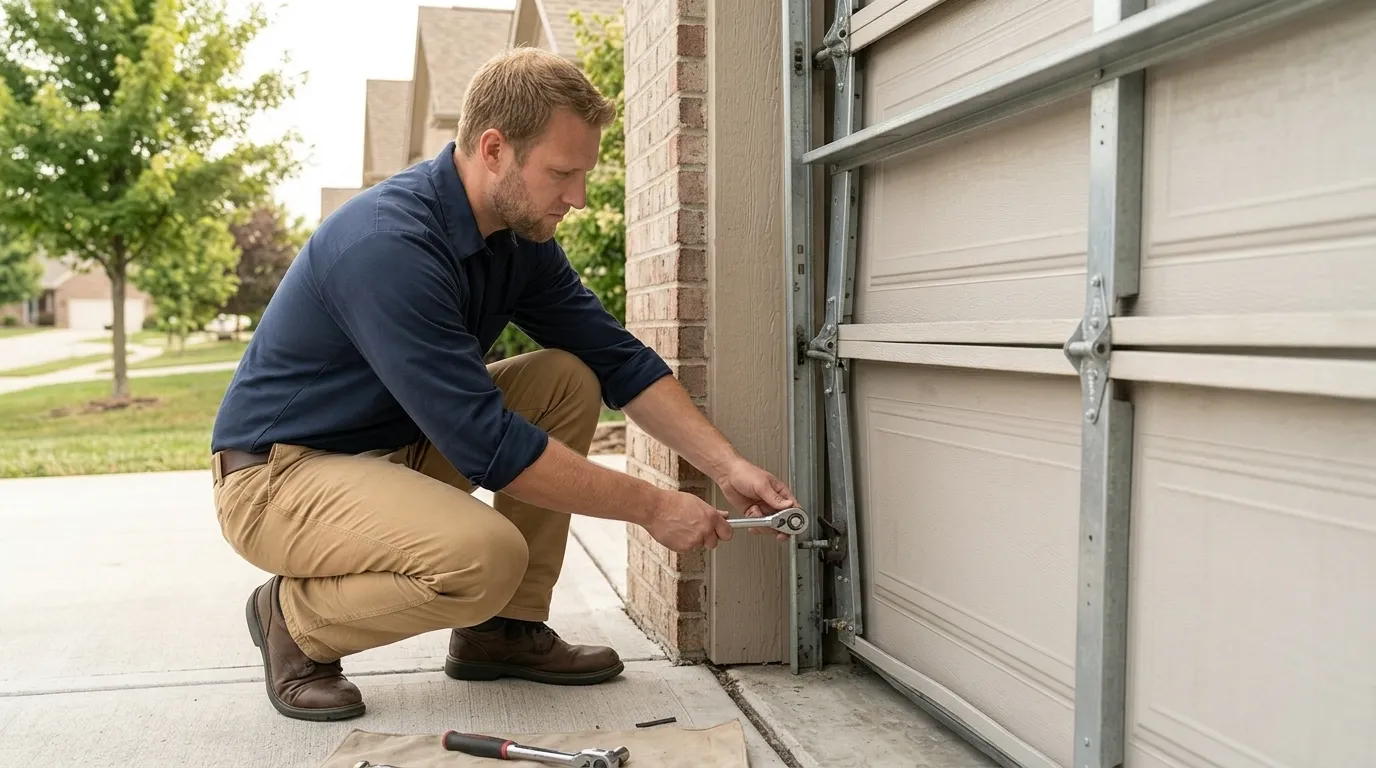
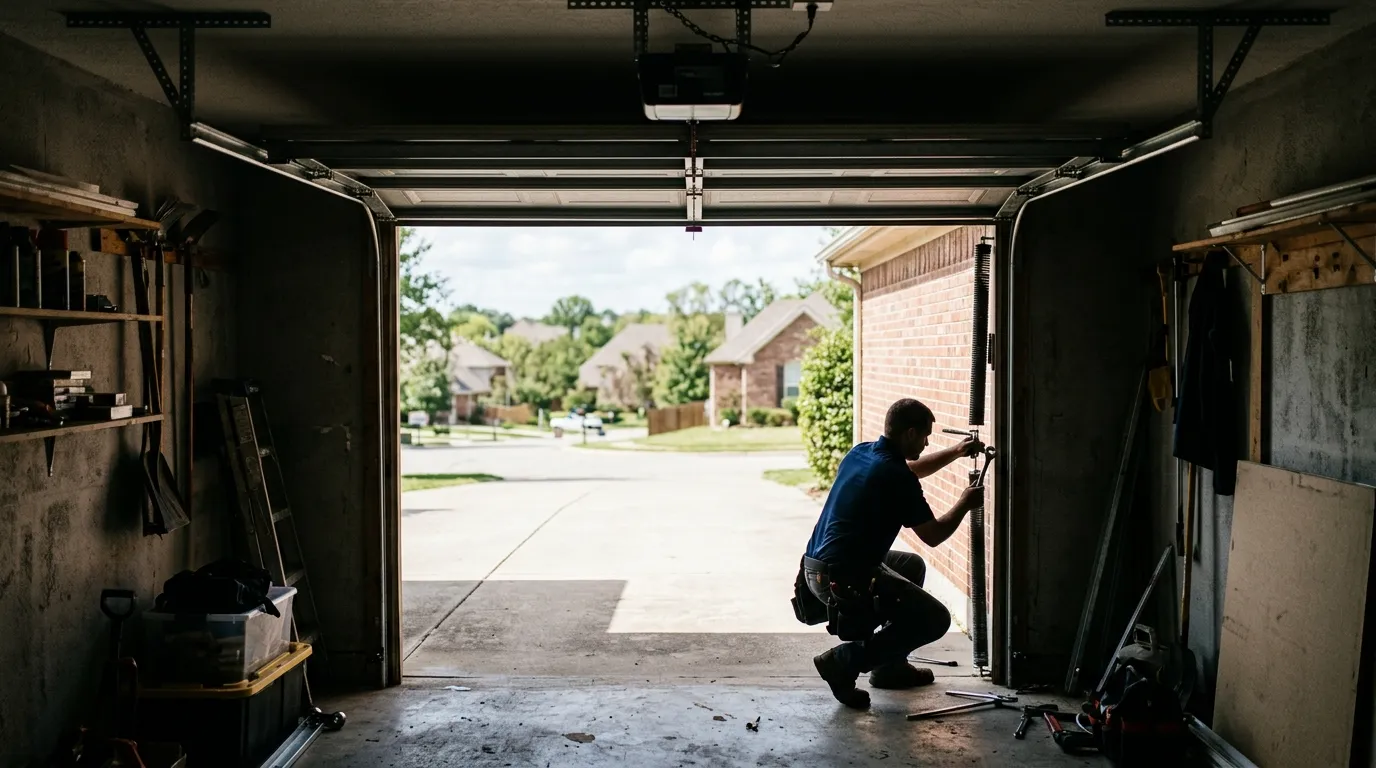
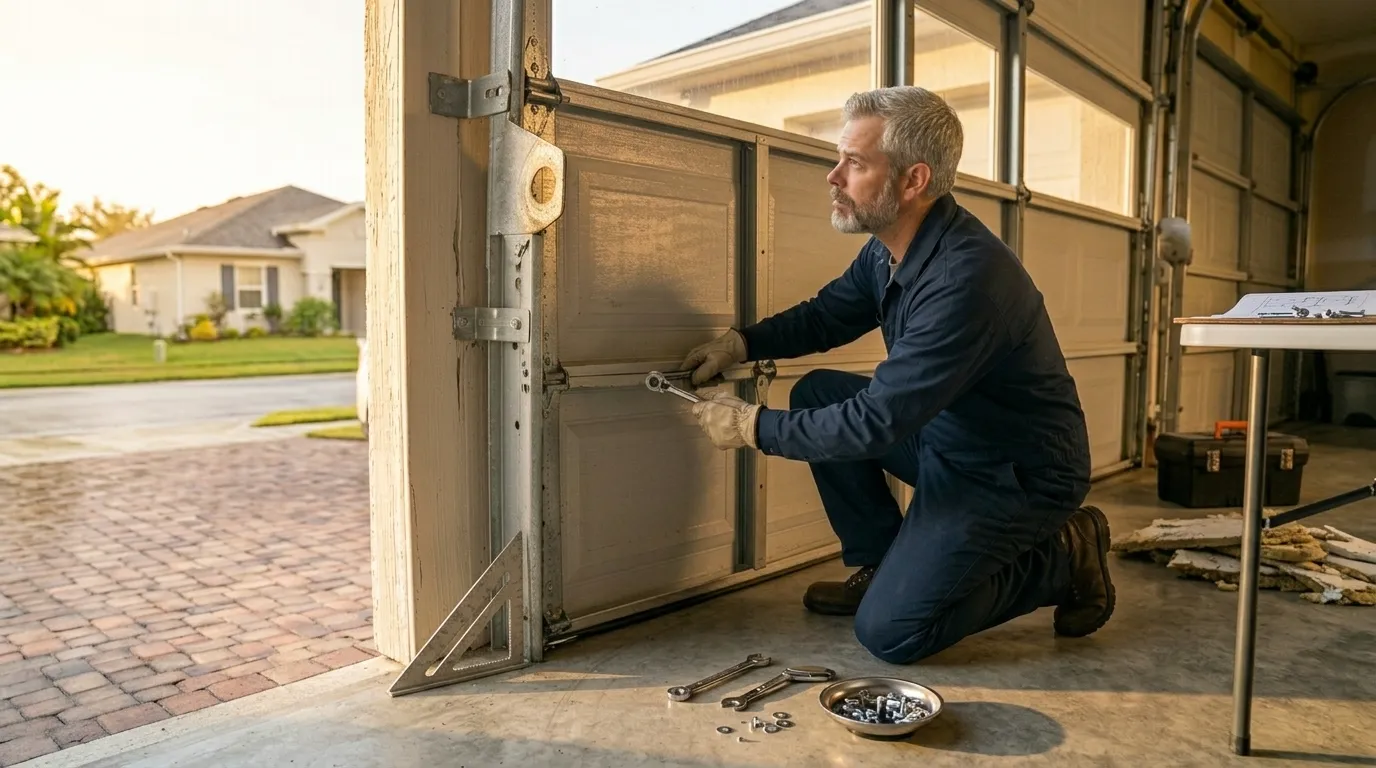
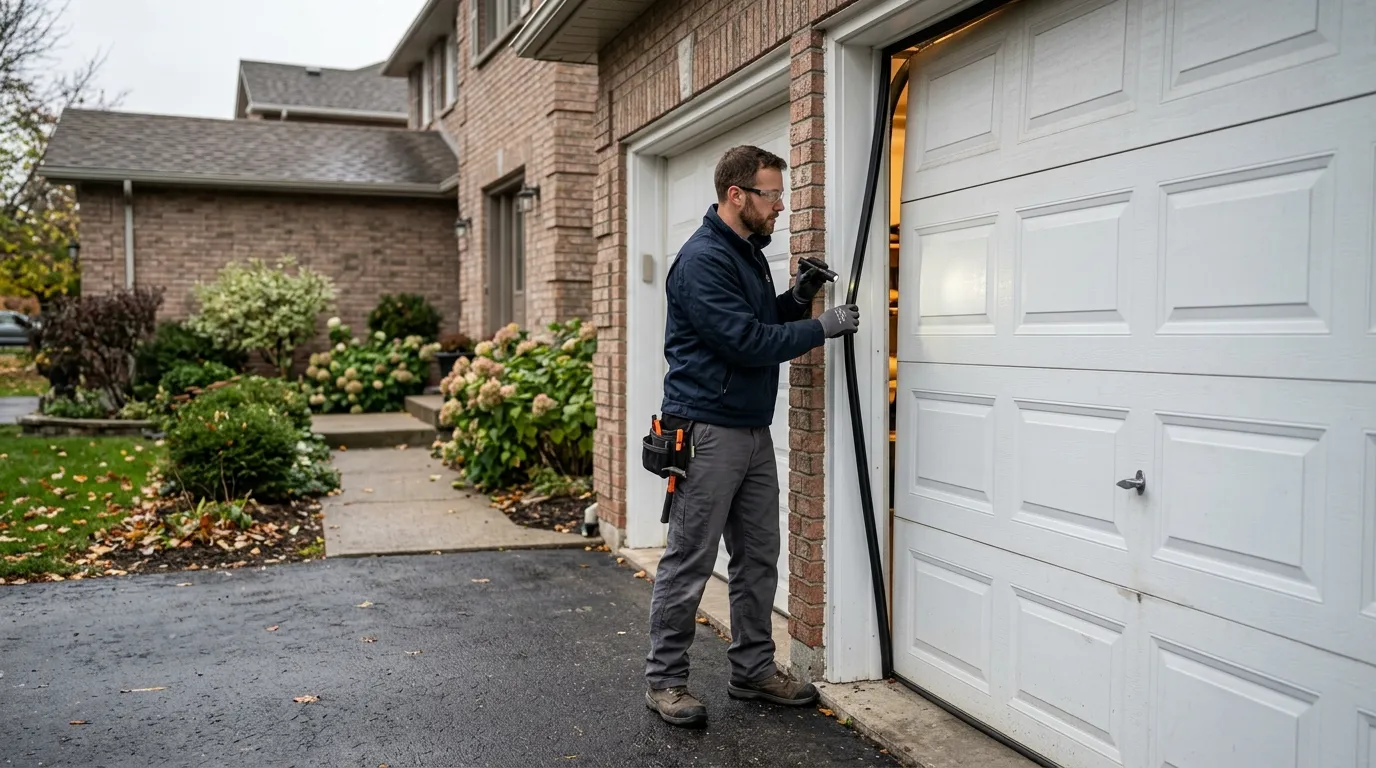
The most common call is a door that doesn't respond to the remote or wall button at all - no light, no hum, nothing. Close behind that is an opener that runs but the door doesn't move, which usually means a stripped gear inside the housing rather than anything wrong with the door itself. Some callers describe a light that blinks a set number of times and then stops; that's the unit trying to tell you what failed before it gives up entirely. Grinding or a high-pitched whine right before the unit quits is a gear on its way out. Because summers here fall into the severe-heat band, we also see openers that work fine in the morning and quit by afternoon once the attached garage heats up and a marginal circuit board finally gives out under thermal stress. If your door reverses on its own or won't close all the way, that's more often a sensor or track issue than the opener motor, and it's worth mentioning that separately when you call so we bring the right parts the first trip.
What Causes It Around Here
Across the 13 communities we cover - Armona, Laton, Lemoore, Riverdale, Kingsburg, Corcoran among them - the housing stock is overwhelmingly 1980s and 90s construction, so the same chain-drive and screw-drive openers are failing on the same schedule block by block rather than as isolated bad luck. An opener built or installed in that window is now 25 to 45 years old, well past the working life of the gears, capacitors, and circuit boards inside it, even on units that were never abused. The severe-heat climate band this area sits in accelerates that failure: attached garages here run hot for months at a stretch, and heat is harder on electronics than daily use is. Across the service area's roughly 23,164 owner-occupied houses out of 51,462 households, a lot of these openers were installed by the original builder and never touched since, which means the first sign of trouble is often the first time anyone has looked inside the unit.