Riverdale homes run older than the region's median - 1974 builds mean original torsion hardware. See what that costs to fix versus replace at local income levels.
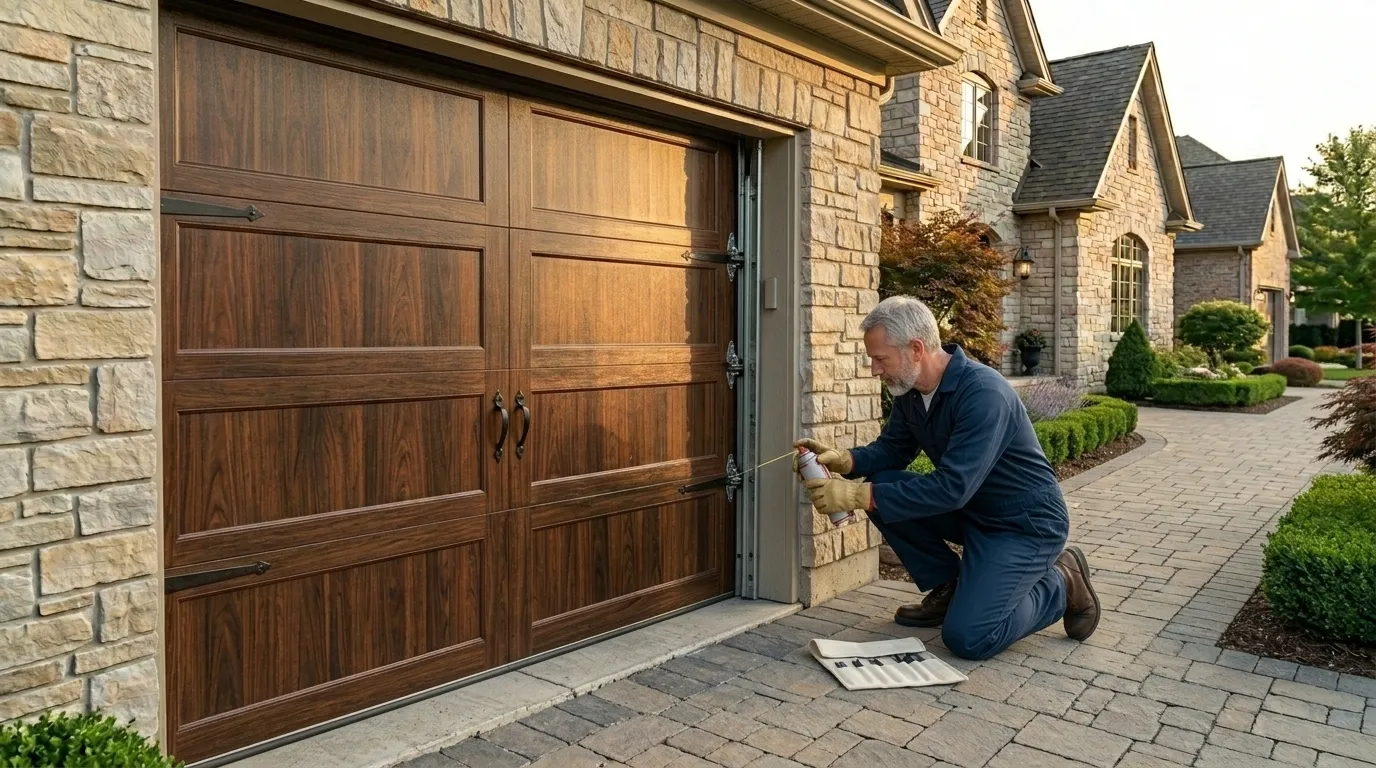
Riverdale's median home was built in 1974, a decade older than the 1982 median across the wider service area. That gap matters on a garage door. Houses from this era came with steel torsion springs and openers that have now had 50 years of Central Valley heat working against them. The climate here runs on the severe end of the heat band, and heat is what kills lubricant in a torsion spring first - the grease dries out, the coils bind, and the spring finally lets go under load instead of cycling smoothly.
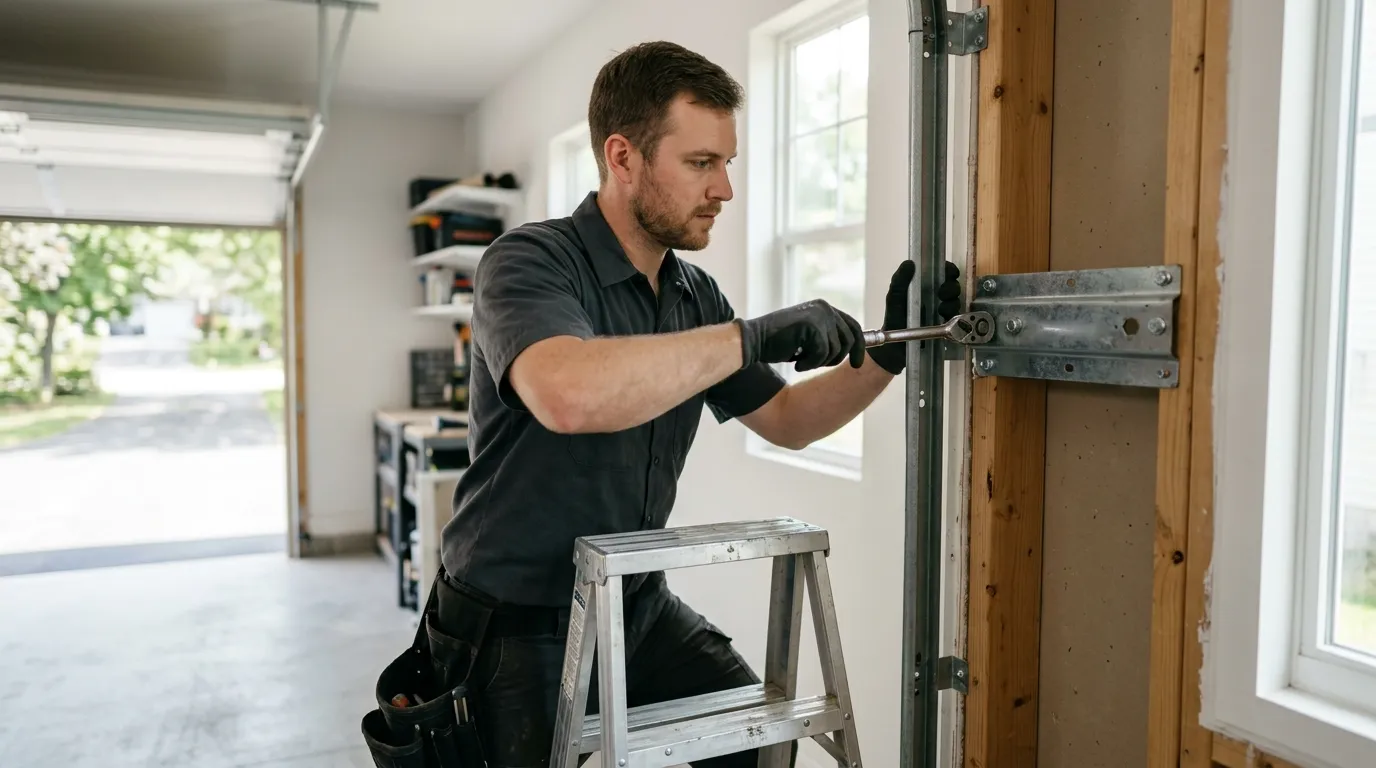
A lot of the original hardware in Riverdale is side-mounted torsion, the kind that isn't stocked on most trucks because newer builds elsewhere in the region switched over years ago. That's not a Riverdale-specific defect, it's just what's still hanging in these garages. When a spring on a door like this snaps, it usually takes the cable or a roller bracket with it, because none of that hardware has been replaced since the house went up.
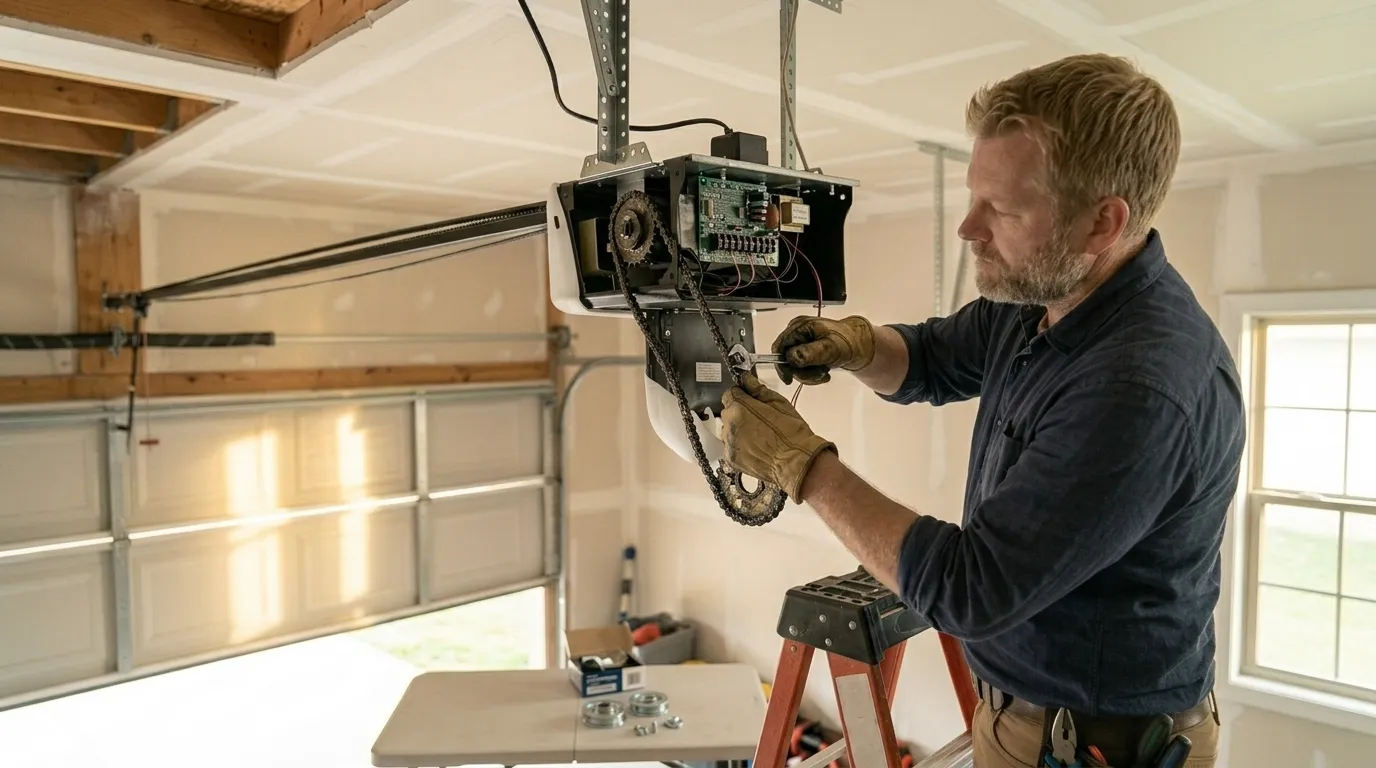
Opener boards from the 1970s and early 1980s also fail differently than newer units - capacitors dry out, logic boards get flaky in high heat, and the failure looks intermittent before it's total.
How It Shows Up
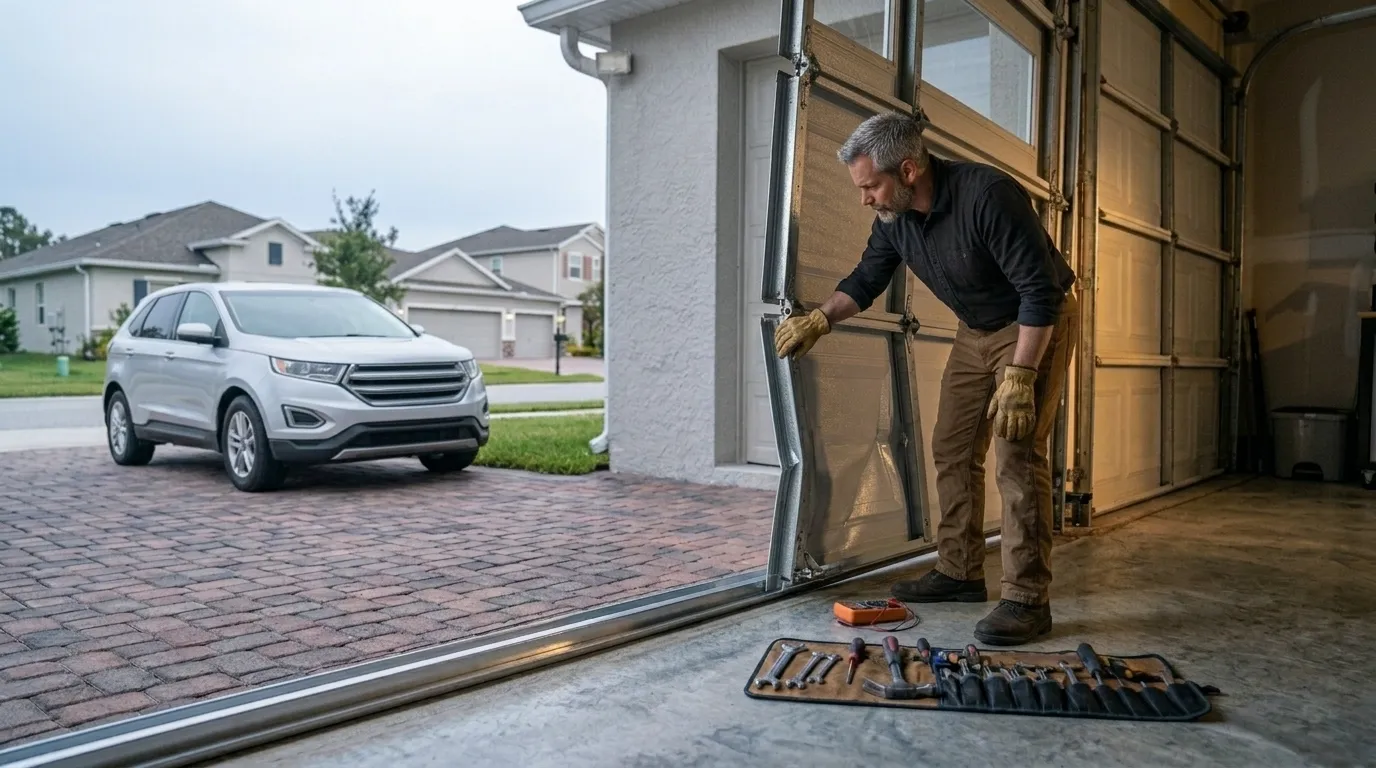
On a torsion spring from a 1974-era build, the tell is a door that feels heavier than it used to, or one side of the door dropping faster than the other when you pull the release cord. If a cable frays on that old bracket hardware, you'll hear a scrape or a pop before it lets go - don't run the opener through that noise, it strips the track.
On the opener side, heat-related board failure in this climate band tends to show up as a door that reverses for no reason, or a remote that works some days and not others. That's usually not the remote, it's the receiver board cooking in a hot garage for decades.
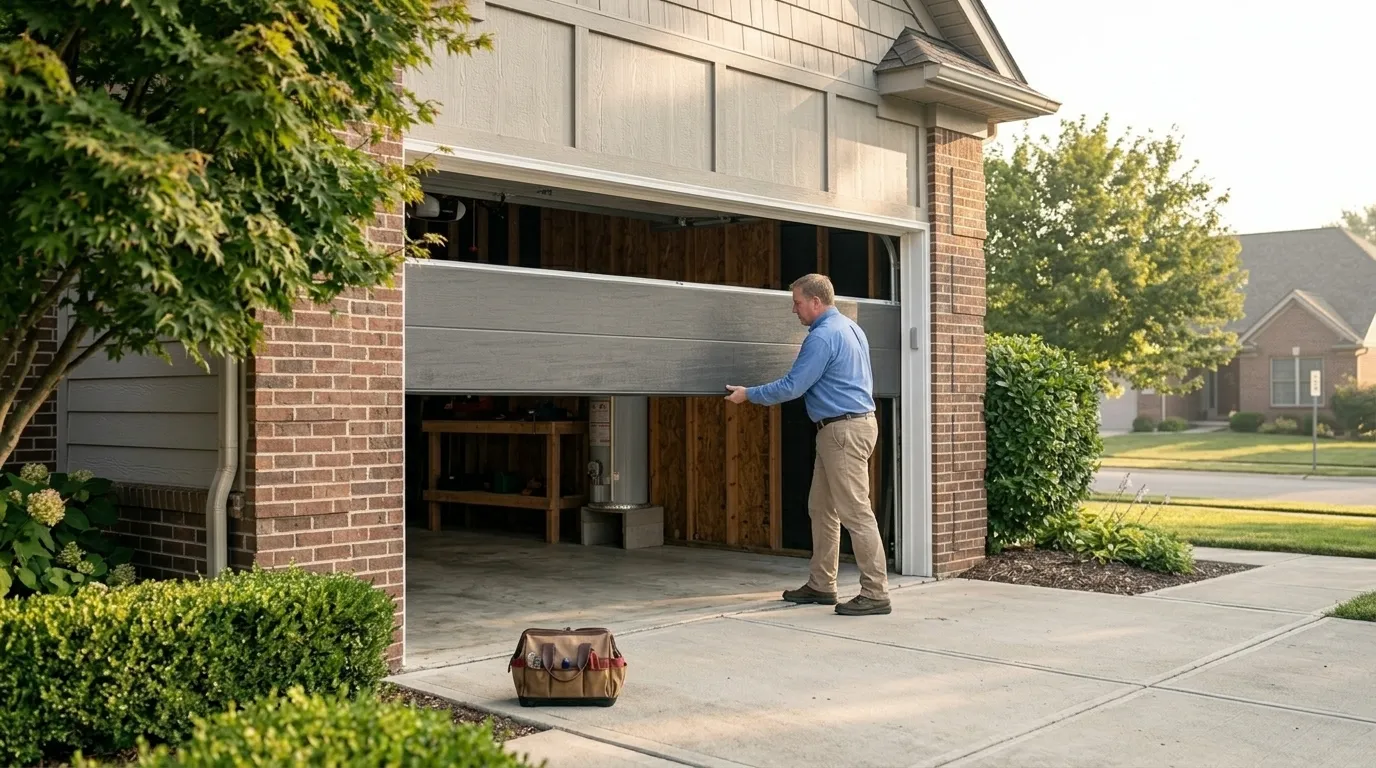
A sagging panel on an original steel door from this period is a rust and fatigue issue more than a hardware one - the metal itself has thinned out at the stress points near the rollers after this many summers.
What You Pay
Median household income in Riverdale runs about $54,250, noticeably under the $65,781 median for the broader area this company covers. That number is the honest starting point for the repair-or-replace call: at this income level, a full torsion spring replacement with new cables and rollers is almost always the right move over a full door swap, especially on a door built to the 1974 standard that's otherwise structurally sound.
Where replacement starts to make more sense is when the panel steel itself has thinned and rusted through near the roller tracks, or when an opener board failure lines up with a spring failure at the same time - fixing both piecemeal on an old door can approach what a new mid-range door and opener cost installed. We don't carry a fixed price list here because every door's hardware age and damage is different, but on a straight spring-and-cable job on original 1970s hardware, that's the repair side of the line, not the replace side.
We won't push a full door replacement on a homeowner here unless the panel or frame itself is failing - a working door with old but sound hardware doesn't need to become a new door.
How Long You Are Without the Door
Riverdale sits about 14 miles from our Hanford base, so a truck coming out here is a real drive, not a five-minute hop across town. We don't promise a same-hour window for this town and won't pretend otherwise - plan on scheduling the visit rather than expecting a walk-up fix.
The bigger factor on how long you're without a working door is parts, not the drive. Torsion springs and cables sized for original 1974-era hardware aren't something every supplier keeps on the shelf, since most new construction in the region moved to different spring sizing decades ago. If the broken part is common stock, the repair itself is usually done same-visit once the truck arrives. If it's an odd size off an original 1970s installation, that's the one honest delay we'll flag up front rather than promise around.
How it works
From “it’s stuck” to “it’s fixed”
01
Tell us what’s wrong
Describe the symptom - won’t open, loud bang, opener runs but the door won’t move.
02
On-site diagnosis
A technician tests the door under power and by hand and finds what actually failed.
03
Clear, up-front plan
You get the fix that’s needed and what drives the cost - before any work starts.
04
Repaired & tested
The repair is done, the door is set true and tested, and the work area left clean.
Serving Hanford, CA - tell us what your door’s doing and we’ll take it from there.
Not just because it's from the 1970s. If the panel steel and frame are still sound, a torsion spring, cable, or roller job brings an original Riverdale-era door back to full working order. Replacement makes more sense once the panel itself has rusted or thinned near the roller tracks, not just because the hardware is original.
Why did my opener start reversing on its own?
On an opener this old, a board that's spent decades in a hot Riverdale garage often develops intermittent faults before it fails completely - reversing without an obstruction is a common early sign. It's usually the receiver board, not the remote or the sensors.
Do you keep parts for older torsion springs in stock?
Common spring sizes, yes. Original hardware from 1970s-era builds sometimes uses sizing that isn't standard stock anymore, which can add a short delay to that specific repair. We'll tell you up front if that's the case rather than guess at a timeline.
How far out is Riverdale from your base?
About 14 miles from Hanford. We schedule visits out here rather than offering a walk-up same-hour window, since it's a real drive, not a short trip across town.
Ready to get your garage door sorted?
Tell us what it’s doing and where you are in Hanford - we’ll take it from there.