What Is on the Truck
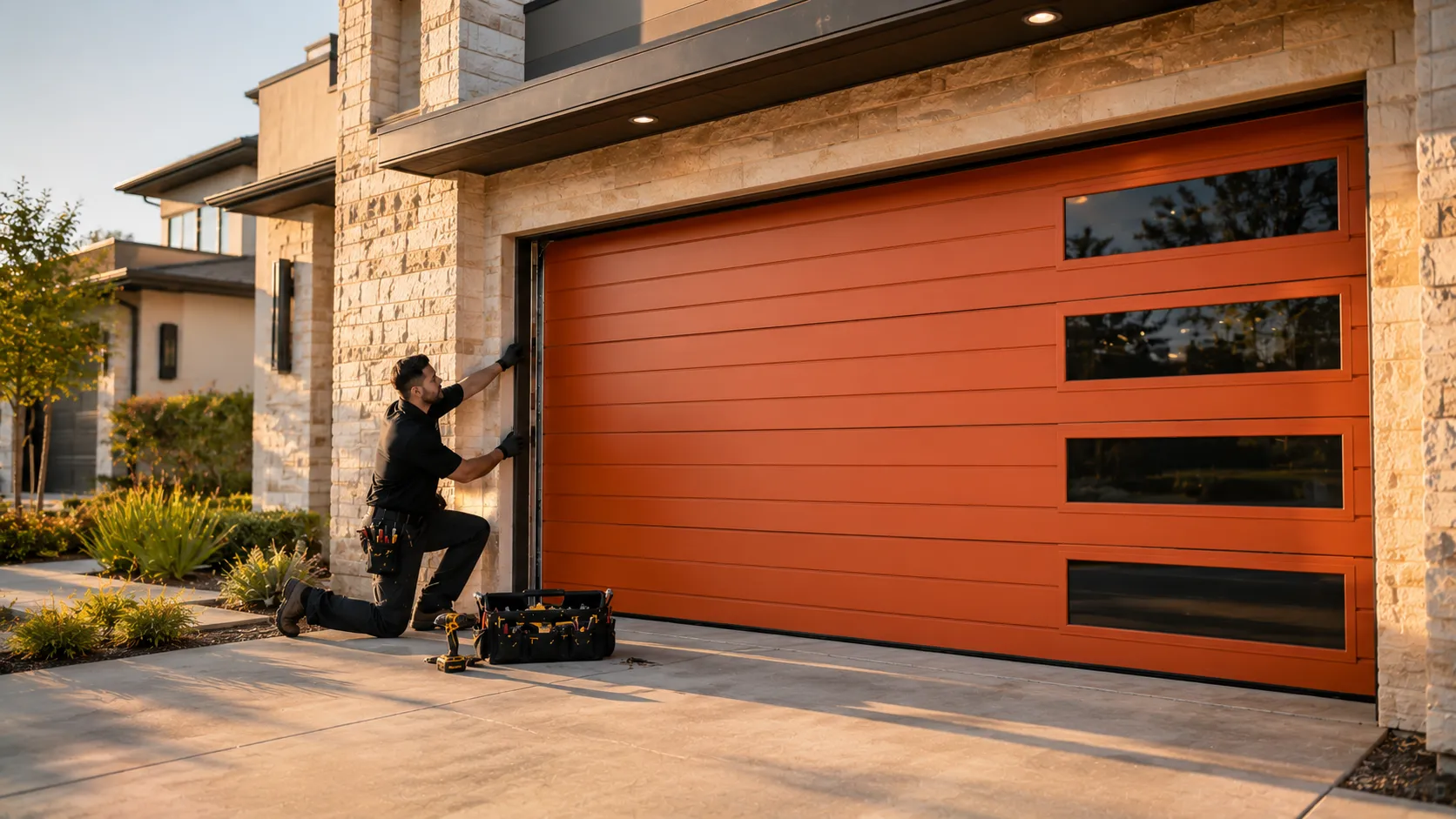
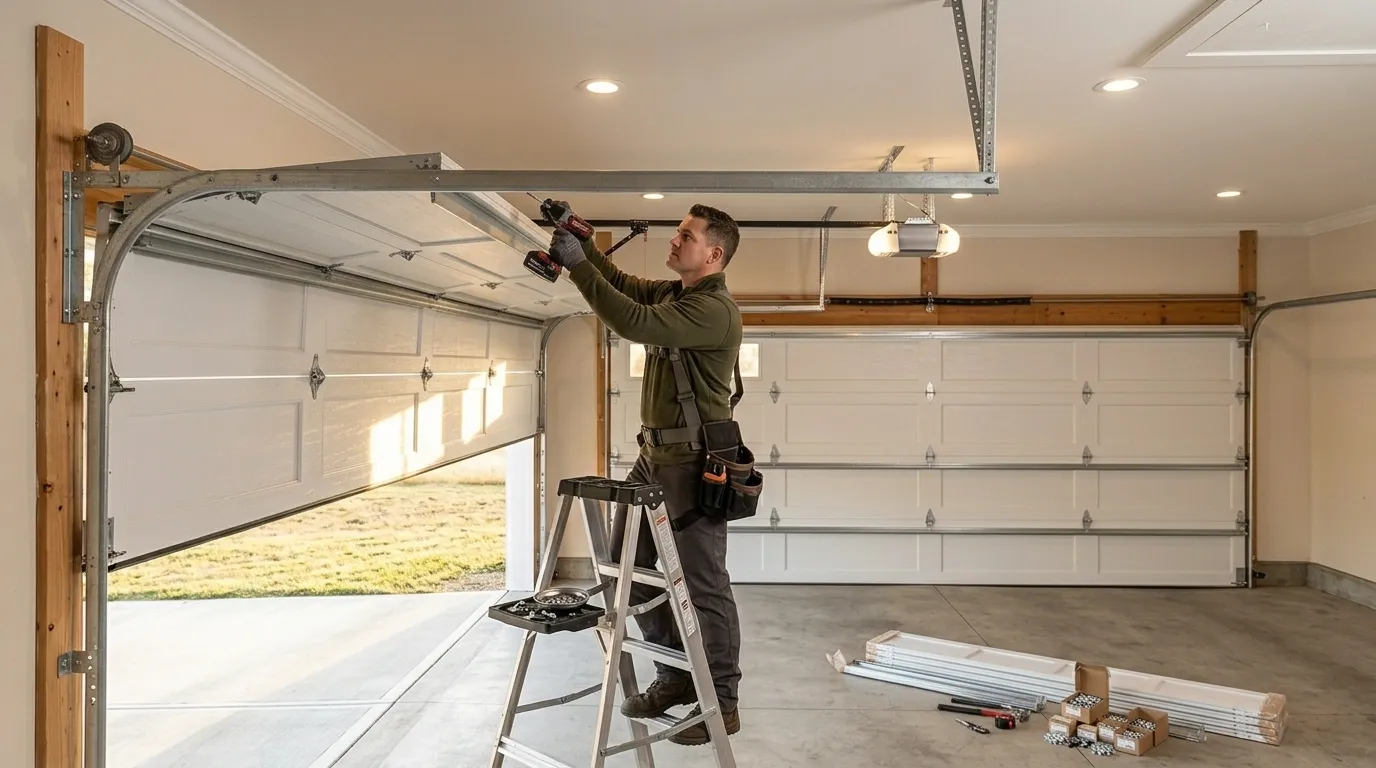
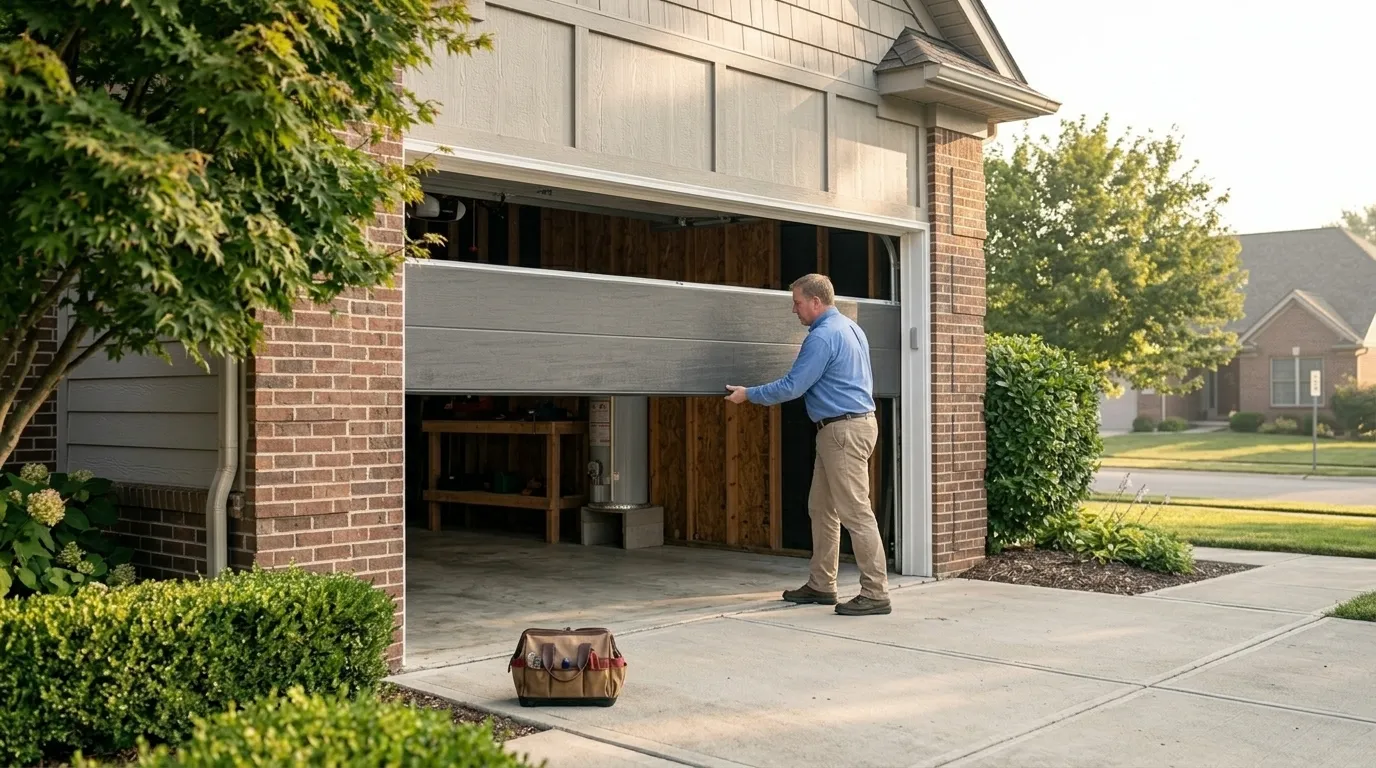
Most houses in Kingsburg went up around 1988, roughly a decade newer than a lot of the older stock closer in toward Hanford. That means steel torsion springs sized for lighter sectional doors, adjustable-tension hardware instead of the older side-mount coils, and factory chain or belt openers rather than anything from the earlier screw-drive generation. The truck carries torsion springs in the common residential sizes, standard nylon and steel rollers, extension cables, and opener logic boards for the mainstream residential brands sold through that era and after. What we don't stock is anything specific to a discontinued opener model or an odd-width panel - those get special-ordered, and we'll tell you the lead time before we quote the job rather than after.
Doing It Yourself
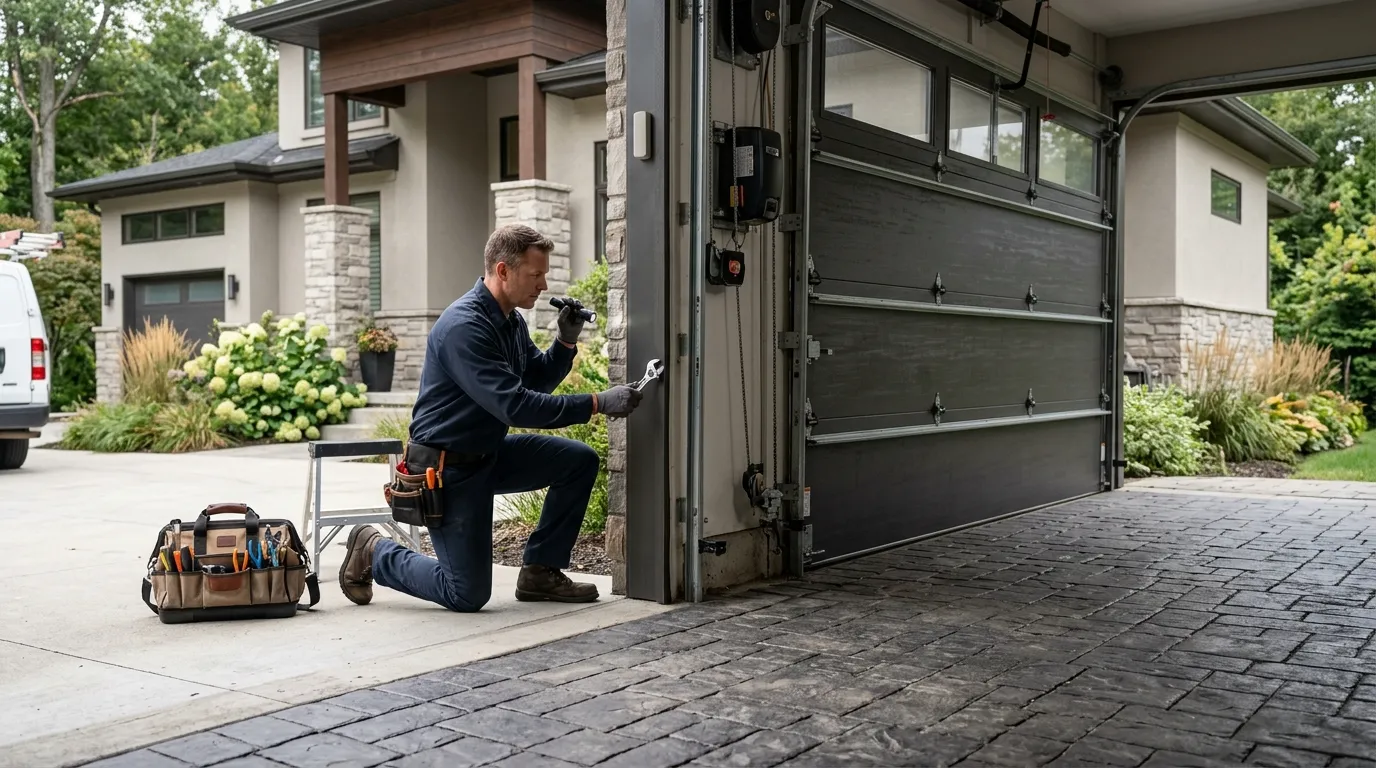
A door that won't open because the sensors are misaligned, or one where the remote battery died, is a five-minute fix you don't need a truck for. Check the safety-eye alignment at the bottom of each track first - a bumped sensor is the single most common no-start call we get, and it costs nothing to rule out. What you shouldn't touch: a broken torsion spring. On the sectional doors common to Kingsburg's housing stock, that spring is wound under enough tension to break a wrist or worse if you loosen the wrong bolt. Same goes for cable replacement on a door that's still under spring tension. If the door is off its track or came down hard on something, leave it down and call - a door forced back onto bent track usually turns a $200 repair into a $600 one.
How It Shows Up
With 4,445 households in Kingsburg, the failure pattern we see tracks the same severe-heat band that covers the rest of the service area - steel expands and contracts through summer heat cycling, and that's what tires out spring temper and dries out roller bearings faster than age alone would. On a house built around 1988, that puts a lot of doors right in the window where the original spring and rollers are due, whether or not anyone's noticed a problem yet. The usual tell is a door that's started sagging slightly on one side, or an opener that strains and reverses partway up. Neither one is an emergency the day it starts, but neither one gets better on its own either.
How We Fix It
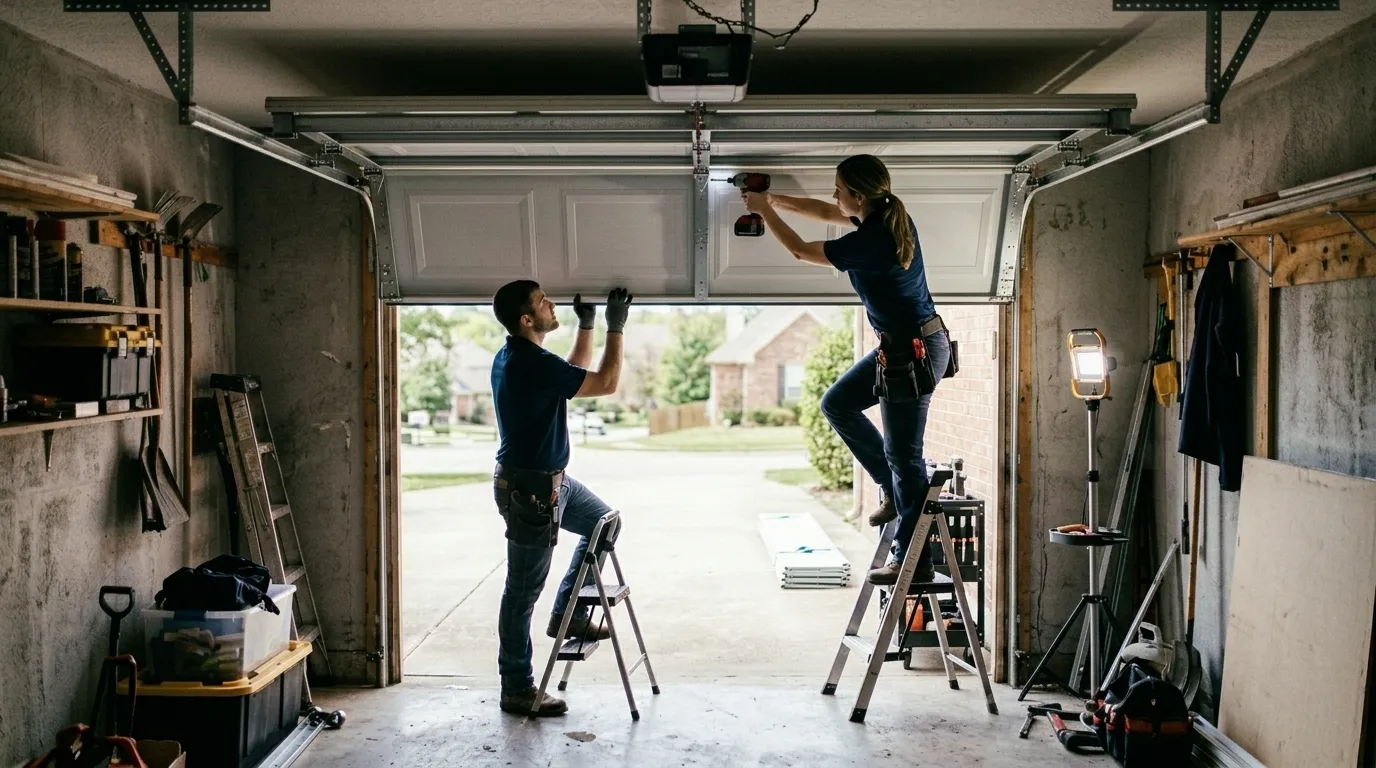
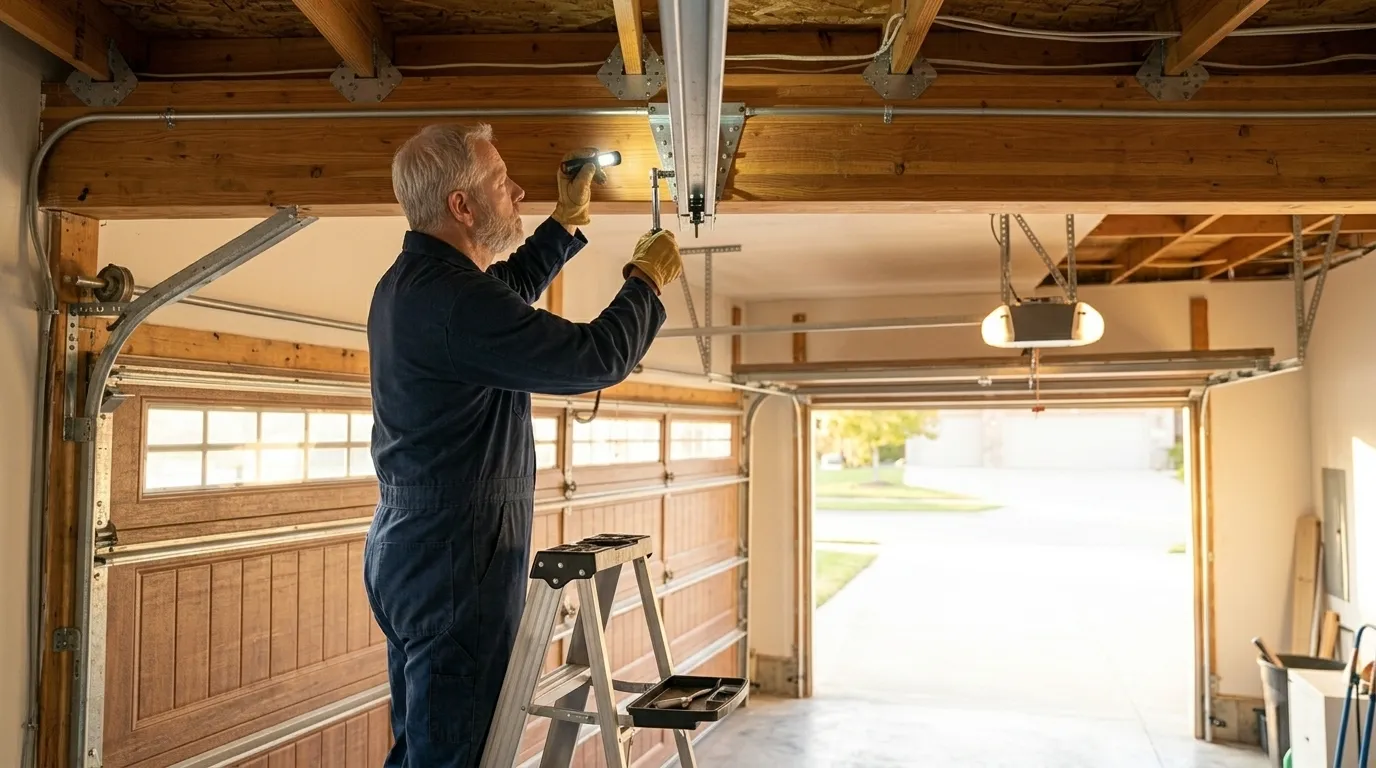
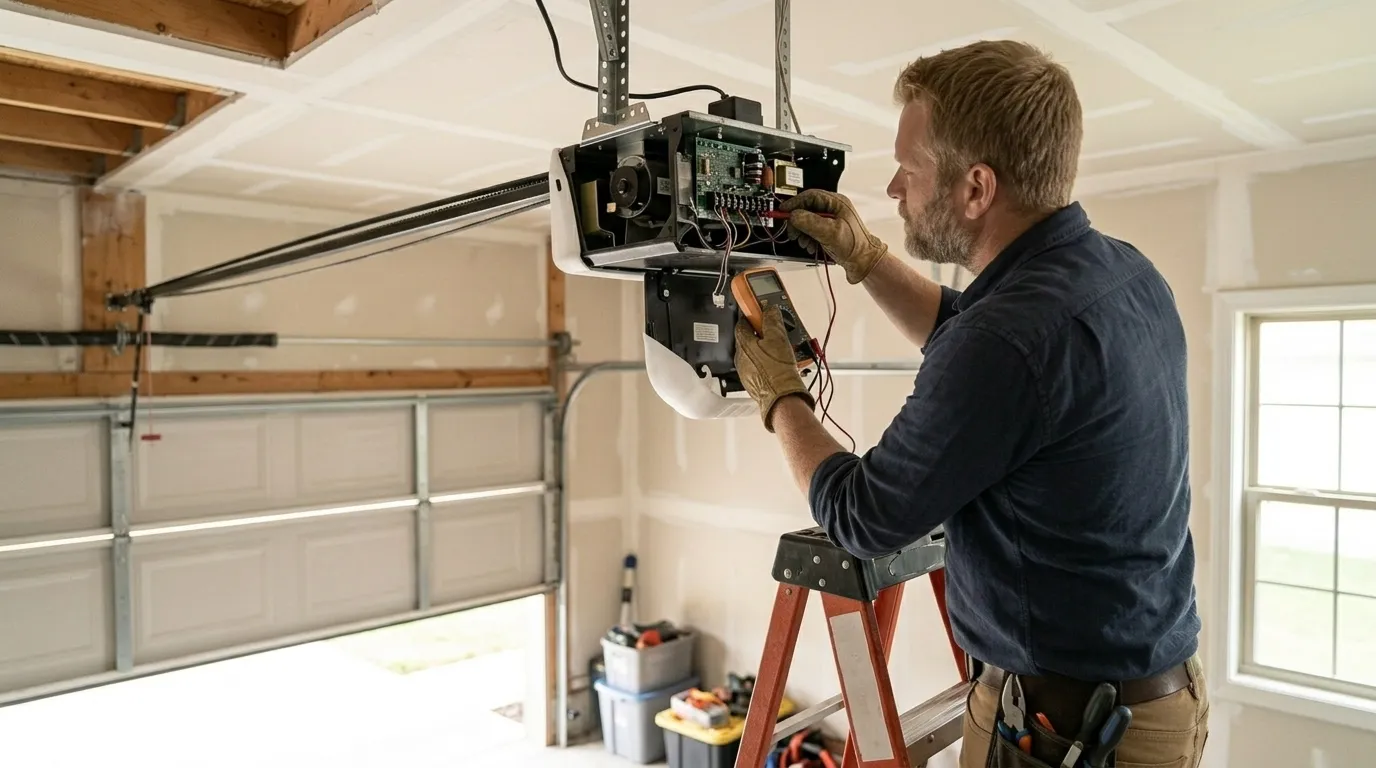
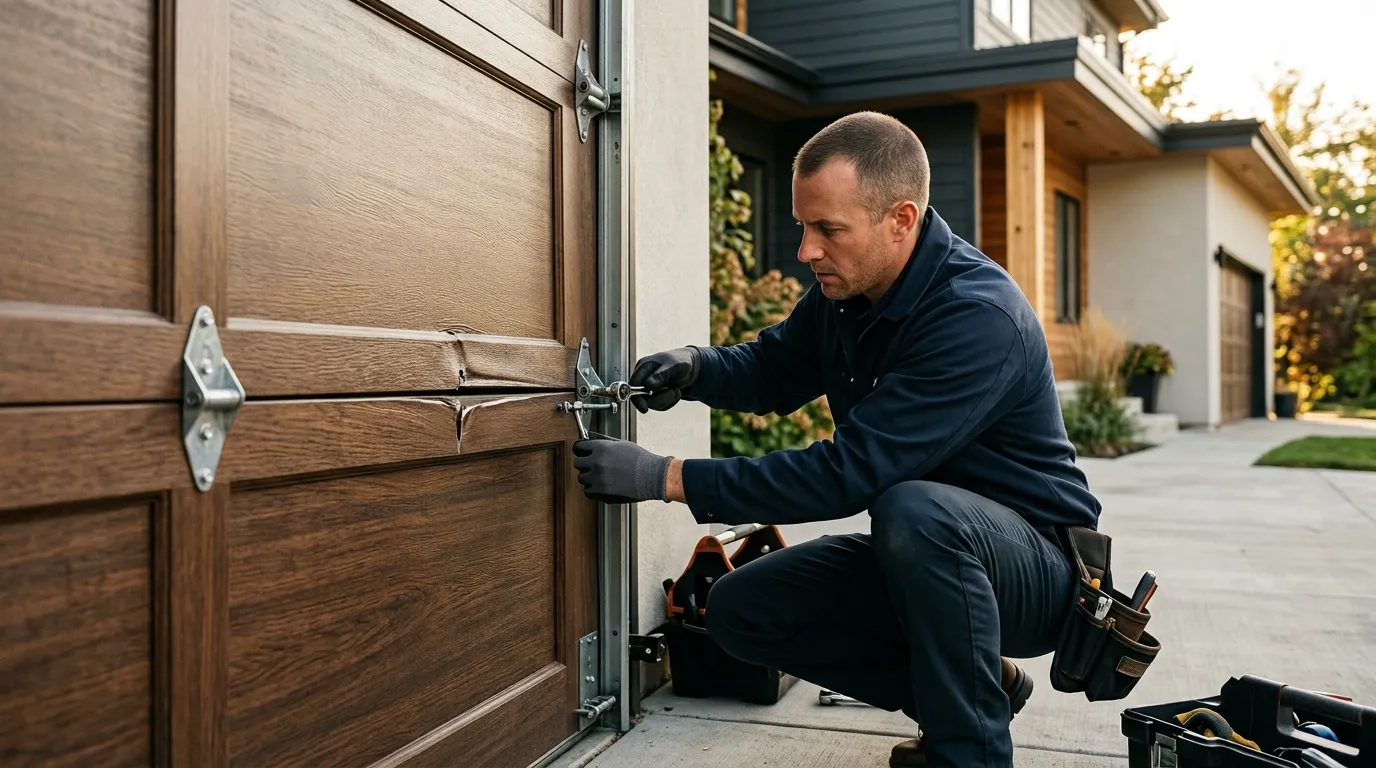
For a broken or worn torsion spring, we match the wire size and wind to the door's weight rather than swap in whatever's closest - an undersized spring just fails again in a year. For openers from the 1988-and-later stock common in Kingsburg, most repairs are a gear, a logic board, or a sensor, not a full unit replacement. Track and roller work is straightforward on standard sectional doors; it gets slower and more expensive on anything with a custom width or a discontinued panel profile, which is the one case we'll flag before we start rather than after we've already opened it up.