Why Hanford's 1980s Housing Stock Changes the Garage Door Math
Hanford homes mostly date to 1974-2003, and our severe summer heat wears out springs and openers faster than mild-climate towns. Here's what that costs.
Most houses across Hanford's thirteen surrounding communities were built between 1974 and 2003, with the median landing around 1982. That's a specific window: garage doors from that era ride on torsion springs and openers sized for a lighter, single-panel steel door, not the heavier insulated doors people buy today when they replace one. Those original systems weren't built with today's heat-rated grease or nylon gear compounds either.
That matters here because Hanford sits in a severe-heat climate band. Summer heat doesn't just make the garage uncomfortable - it cycles steel spring coils through expansion and contraction all season, and it dries out whatever lubricant was on the rollers and hinges when the house was built. On a door that's already 30-40 years old, that heat cycling is what turns a slightly noisy track into a snapped cable or a spring that lets go without warning.
Openers age the same way. A chain-drive unit from the 1980s or 90s running through a hot attic space above the garage sees its gears and capacitors stressed harder than the same unit would in a cooler climate. When we get called out here, the age of the housing stock and the heat are almost always both part of the story.
The Common Mistake
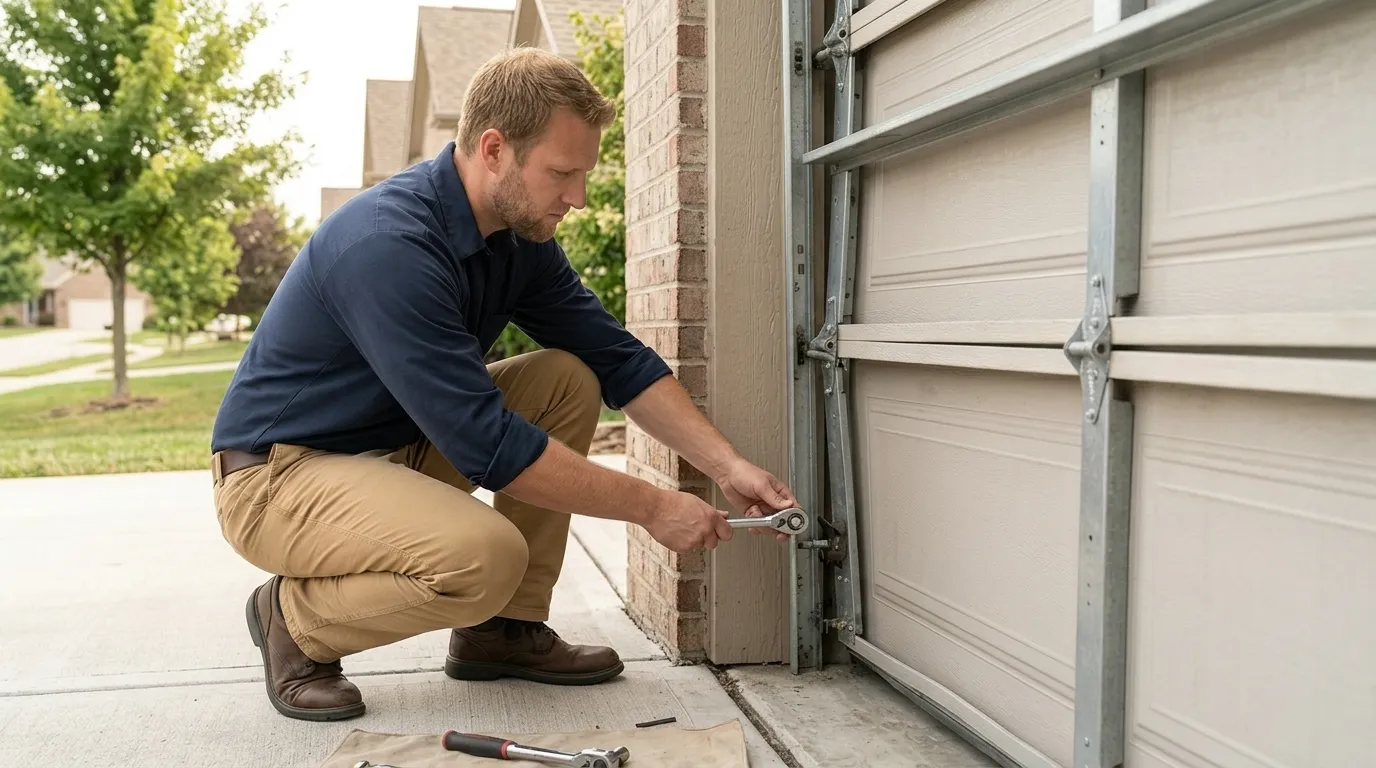
The mistake we see most in this area is treating an older door like it just needs a quick spray of lubricant and it'll be fine through another summer. On a door built in the 1974-2003 window, sitting through repeated heat cycles for three or four decades, a can of WD-40 doesn't fix metal fatigue in a torsion spring - it just masks the noise for a couple weeks. People wait until the spring actually breaks, usually on a 100-degree day when the door is under the most load, instead of having it checked before the heat sets in.
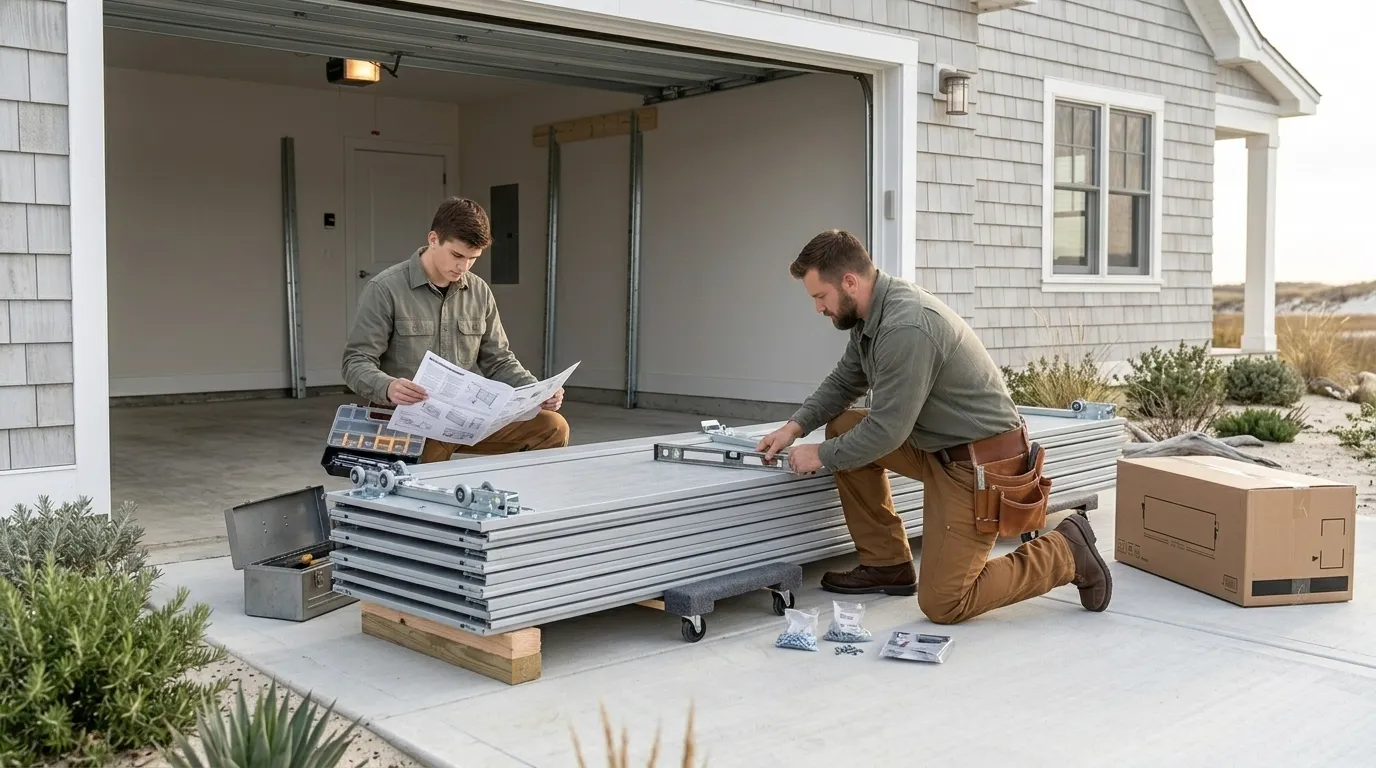
The honest limitation here: some of these original 1980s and 90s doors used panel sizes or spring configurations that aren't standard stock anymore. If your door was original to the house, we sometimes have to special-order a matching torsion spring or a odd-width panel rather than pull it off the truck. That adds a day or two we can't shortcut. If a door is at that point where we're chasing down obsolete parts more than once a year, replacement usually makes more sense than another repair, and we'll say so instead of billing for a patch that won't hold through next summer.
What You Pay
There's no fixed number here - pricing depends on what's actually failed and whether the part is still something we carry or something we have to order for an older door. What we can tell you is what tends to drive the cost in this area. The median household income across the service area is $65,781, and with 23,164 owner-occupied houses spread across 51,462 households, most of what we quote is a repair job on an existing door rather than a full replacement.
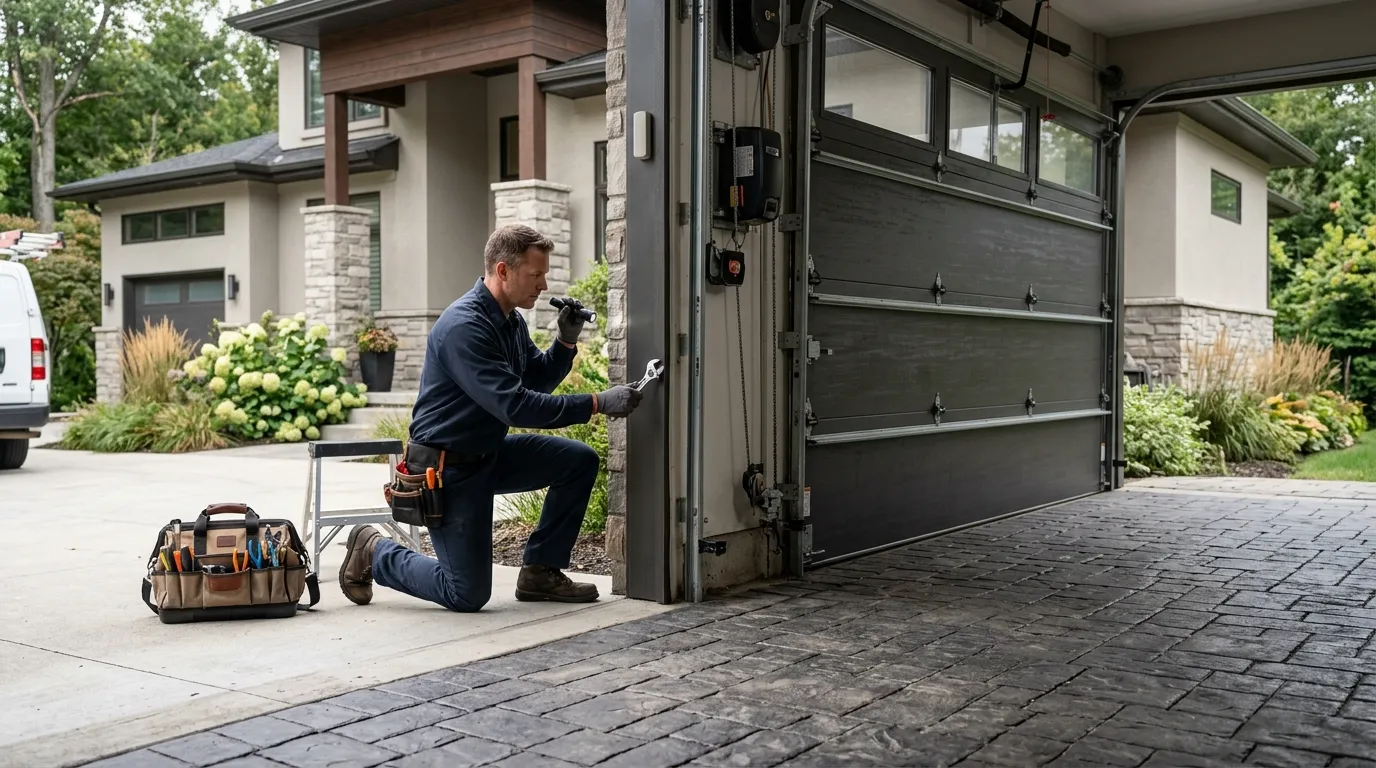
Because so much of the housing stock here dates to that 1974-2003 stretch, the most common jobs are torsion spring replacement, cable replacement, and opener gear kits - all wear items that heat cycling speeds up. A double-wide door costs more in spring and cable than a single, and a job needing a special-order panel or an obsolete spring size runs higher than one where we've got the part on the truck. We'll tell you which category your job falls into before we start, not after.
The Situation
We work Hanford and the smaller towns around it - Armona three miles out, Laton and Lemoore each about eight miles, Traver and Goshen around thirteen, Riverdale and Kingsburg near fourteen, Lemoore Station and Waukena around fifteen, and Selma, Corcoran, Caruthers, and Tulare out toward seventeen to twenty miles. Housing across that whole stretch mostly went up in the same 1980s-90s building push, so the same original hardware and the same heat exposure show up whether the call comes from right in Hanford or from one of the towns fifteen or twenty miles out.
That consistency actually makes the work more predictable. A spring that's failing on a house near Armona is likely the same age and type as one failing in Hanford proper, because the building boom that put up both houses ran through the same years. It's why we ask how old the house is before we ask much else - in this area, that one number tells us most of what we need to know about what's probably wrong with the door.
How it works
From “it’s stuck” to “it’s fixed”
01
Tell us what’s wrong
Describe the symptom - won’t open, loud bang, opener runs but the door won’t move.
02
On-site diagnosis
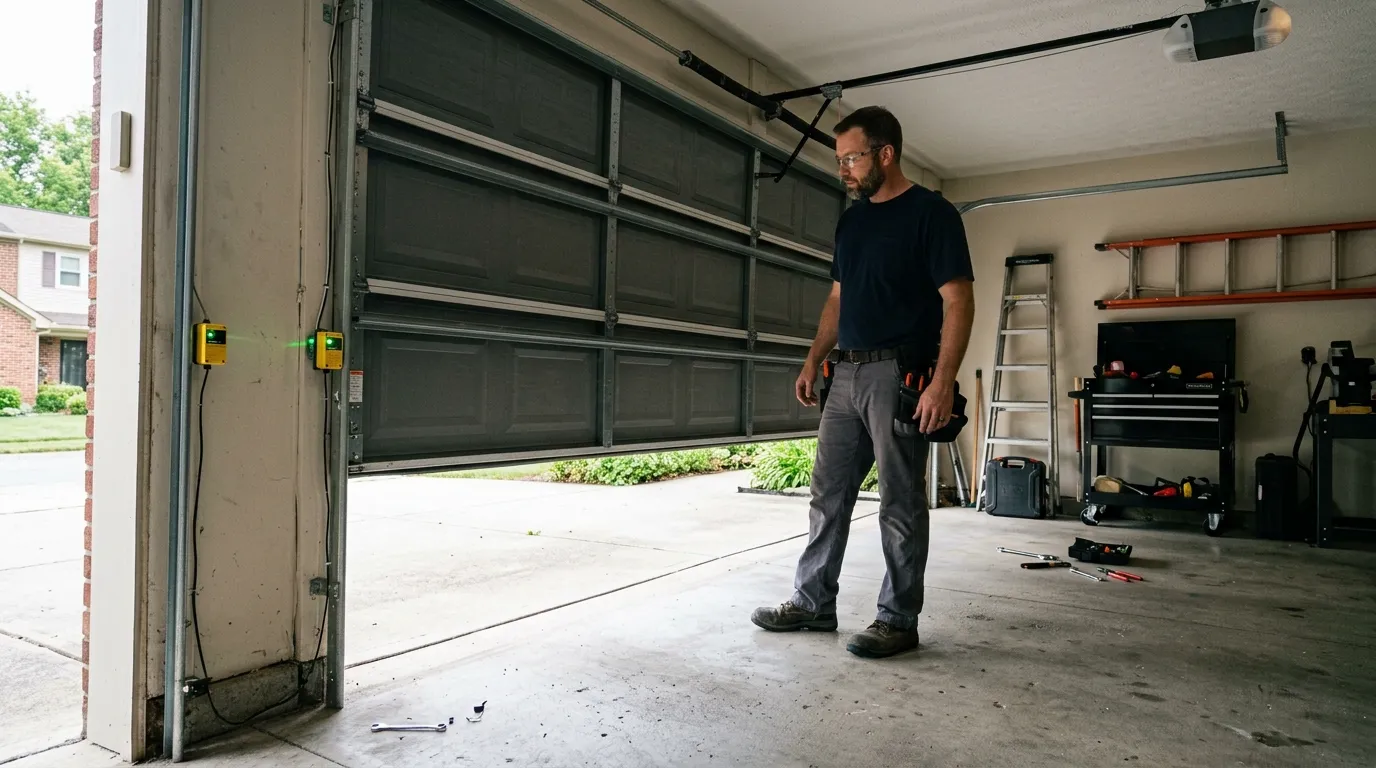
A technician tests the door under power and by hand and finds what actually failed.
03
Clear, up-front plan
You get the fix that’s needed and what drives the cost - before any work starts.
04
Repaired & tested
The repair is done, the door is set true and tested, and the work area left clean.
Serving Hanford, CA - tell us what your door’s doing and we’ll take it from there.
Why does my garage door spring keep breaking every couple of summers?
If your house dates to the 1974-2003 building years common across this area, your torsion spring is likely original or close to it. Severe summer heat cycles that steel repeatedly, and after enough seasons the coil fatigues and lets go, usually on the hottest days when the door is working hardest. Replacing it with a spring rated for the heavier use often outlasts a like-for-like swap.
Is it worth repairing a door built in the 1980s or does it need replacing?
Depends on what's failing. A worn spring, cable, or opener gear on an otherwise sound door is a straightforward repair. But if we're sourcing an obsolete panel size or a spring configuration that's no longer stocked more than once, the repair cost starts closing in on replacement cost, and we'll tell you when that line gets crossed.
Does the heat here actually affect the opener, not just the spring?
Yes. An opener running in a hot attic space above the garage sees its gears, capacitors, and lubricant stressed harder over a season than the same unit would in a cooler climate. On an opener that's original to a 1980s or 90s house, that heat exposure is usually why it's failing sooner than the manual would suggest.
How far out from Hanford do you go for a call?
We cover Hanford and the surrounding towns, including Armona about three miles out, Lemoore and Laton around eight miles, and towns like Selma, Corcoran, and Tulare farther out toward seventeen to twenty miles. Housing stock and heat exposure are similar across that whole area.
Ready to get your garage door sorted?
Tell us what it’s doing and where you are in Hanford - we’ll take it from there.