Serving Caruthers, CA Homes Built in the Late 1970s
Hanford Garage Door Pros drives 18 miles out to Caruthers, CA to fix and replace garage doors on a housing stock that runs a few years older than the rest of the service area.
Caruthers sits on the older end of the housing stock we cover out of Hanford. The area-wide median build year across our service territory is 1982, but the homes clustered around Caruthers run a bit ahead of that, with a local median build year of 1977. That five-year gap matters more than it sounds like on paper - it's the difference between a door and opener from the tail end of one hardware generation and the start of the next.
This is a small pocket. We're talking about roughly 594 households in the immediate area, compared to the 23,164 owner-occupied houses spread across the whole 51,462-household territory we work. Median household income here runs $64,722, close to but a notch below the $65,781 median for the broader area. None of that changes how we price a job, but it does tell us what we're likely to find behind the door panel before we even get there: original hardware, first-generation openers, and doors that have never been touched since the house was built.
What We Will Not Take On
We're straight about this: Caruthers doesn't have a depot or a truck stationed nearby. Every job here starts with an 18 mile drive from Hanford, and that drive is real - it means we can't promise the same-day emergency turnaround we might manage on a job five minutes from the shop. If your spring snaps at 7am on a weekday, we'll get there, but plan on us working it into the route rather than dropping everything.
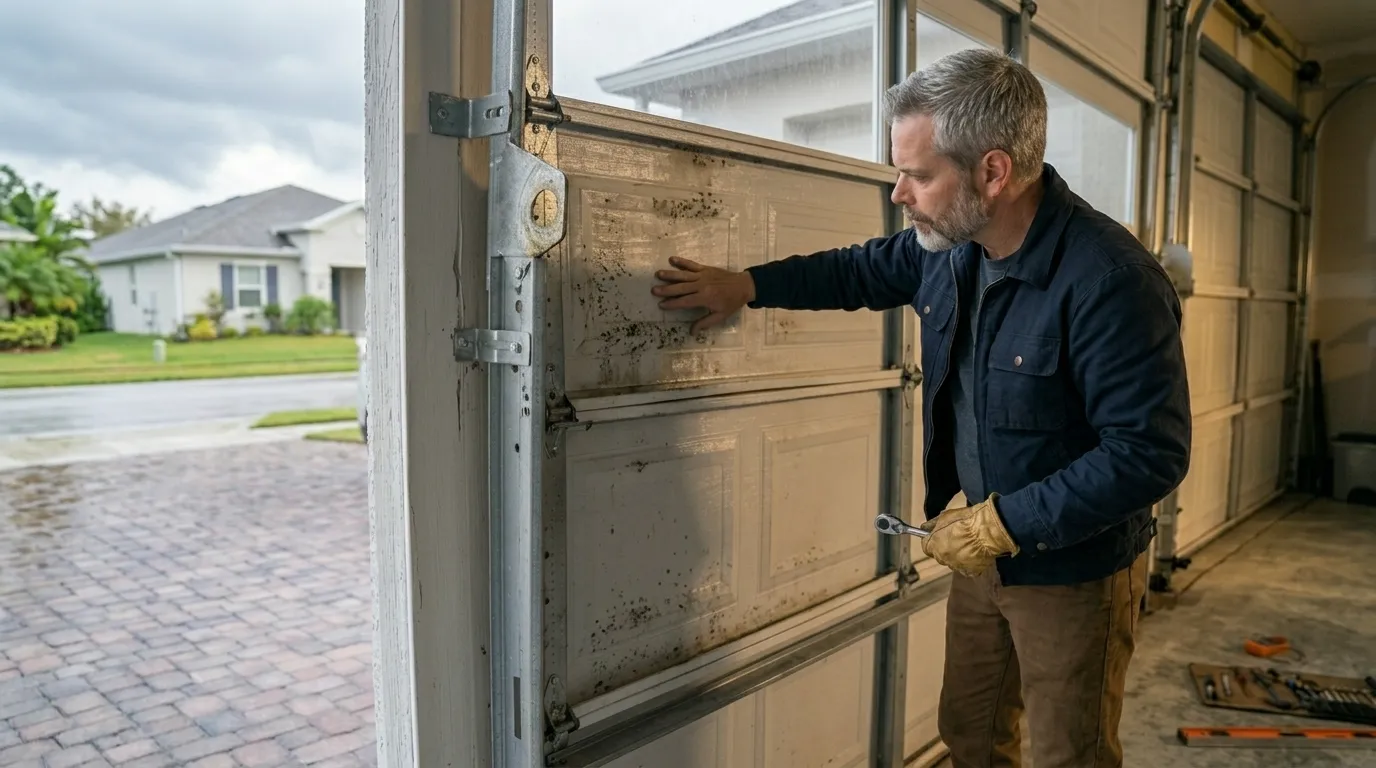
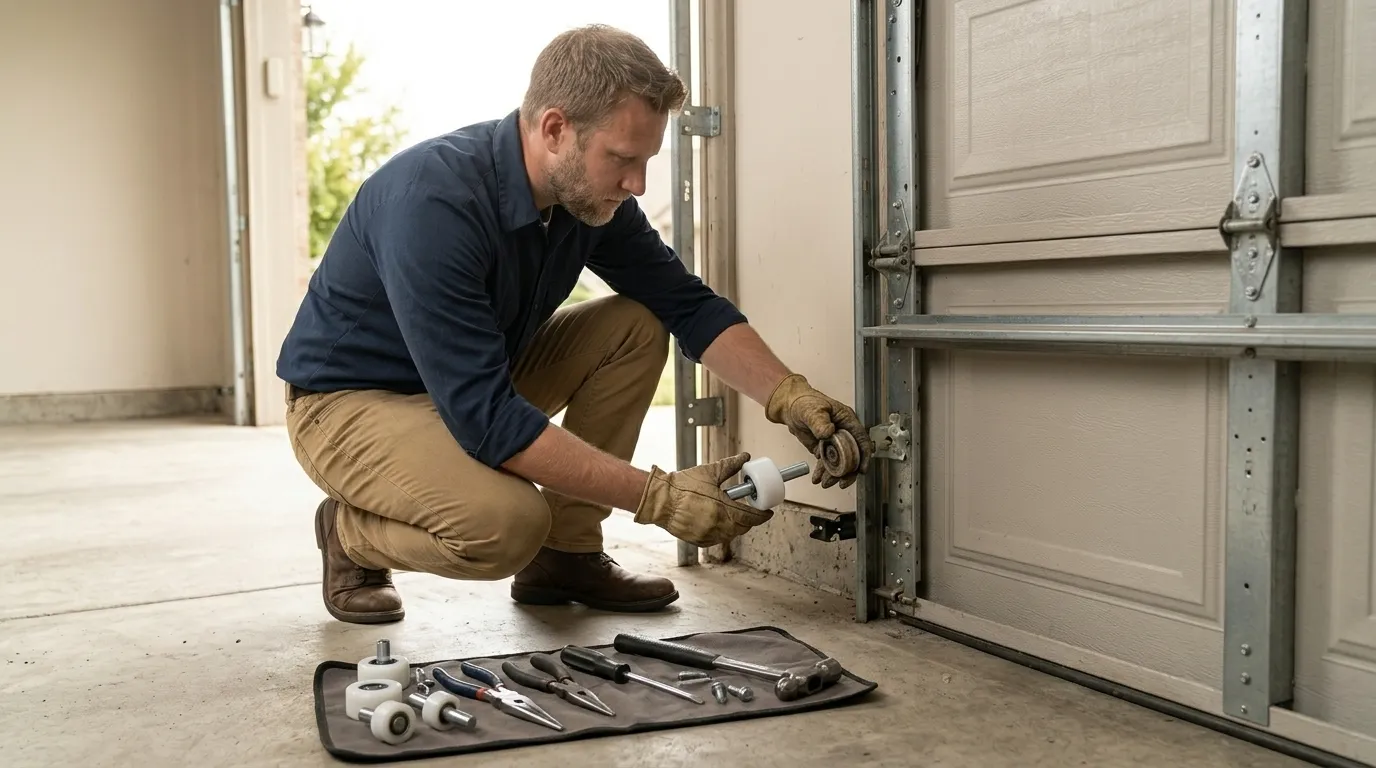
We also won't tell you a repair makes sense when it doesn't. On a door pushing close to fifty years old, sometimes the honest call is that patching a broken roller or a bent track is throwing money at a door that's going to need replacing within a year or two anyway. We'd rather say that up front than sell you a repair we know is temporary. And we're not going to guess at a fix over the phone - on hardware this old, the springs, the drums, and the opener gearing can all be different from what's common a decade newer, and that needs eyes on it before a number gets quoted.
Old Streets and New Ones
Most of what's around Caruthers went up in a tighter window than the rest of the territory - clustered near that 1977 median rather than spread across the fuller 1974 to 2003 range we see closer to Hanford. That means less of the mixed vintage you get in a town where new infill sits next to 1980s tract housing. Here, a lot of the original stock is still standing, largely unmodified, which is common in smaller ag-adjacent communities like this one.
We don't have block-by-block data on which streets got newer garages bolted onto older houses versus which ones are still running the door that came with the build. What we can say is that the age concentration here is narrower than in the larger pockets of the service area, which usually means more consistency in what we find - fewer surprises, but also fewer of the newer insulated steel doors that started showing up as the stock aged into the 1990s elsewhere.
What the Housing Means for Your Door
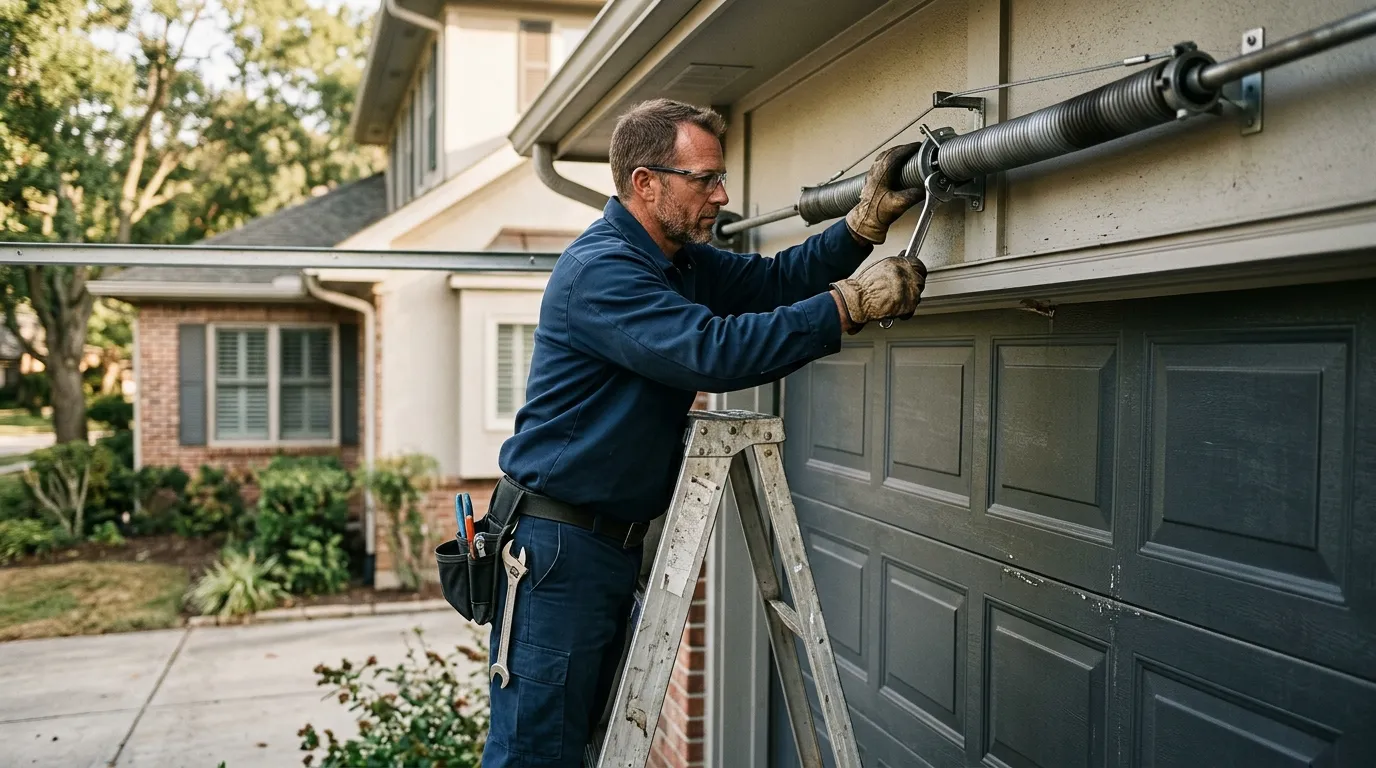
A house built in 1977 usually came with a single-layer steel or wood-composite door, an extension-spring lift system rather than the torsion setups that became standard later, and an opener with none of the safety reversal or photo-eye sensors that got required industry-wide afterward. If your door and opener haven't been touched since the house was built, that's roughly what you're working with.
Heat is the other factor. This area sits in a severe heat band, and on doors this age, that shows up as dried-out lubrication, brittle plastic idler pulleys, and steel panels that have taken decades of expansion and contraction. Extension springs lose tension faster under sustained heat cycling than torsion springs do, which is part of why a door that's been fine for years can suddenly start binding or dropping unevenly. If your track still uses the older bracket style from that era, replacement parts for it aren't always something we carry on the truck - that's one more reason we ask before we drive out, not after.
How it works
From “it’s stuck” to “it’s fixed”
01
Tell us what’s wrong
Describe the symptom - won’t open, loud bang, opener runs but the door won’t move.
02
On-site diagnosis
A technician tests the door under power and by hand and finds what actually failed.
03
Clear, up-front plan
You get the fix that’s needed and what drives the cost - before any work starts.
04
Repaired & tested
The repair is done, the door is set true and tested, and the work area left clean.
Serving Hanford, CA - tell us what your door’s doing and we’ll take it from there.
No. We run out of Hanford, and Caruthers is about an 18 mile drive from there. We still work jobs here regularly, but we're honest that it's a drive-out call rather than a local stop, which affects how fast we can turn around an emergency.
My house was built in the late 1970s - does that change the repair?
Often, yes. Homes from that era commonly have extension-spring lift systems and openers without modern safety sensors. Parts and diagnosis for that hardware differ from a 1990s double-layer steel door, so we ask the build year before quoting.
Is it worth repairing a door this old or should I just replace it?
Depends on what's broken. A snapped cable or a bent roller is usually worth fixing. If the opener, springs, and track are all original and failing together, replacement often costs less over a couple of years than repeated repairs on hardware this age.
Why does the heat here affect my garage door?
This area sits in a severe heat band. Sustained high temperatures dry out spring lubrication faster and make plastic rollers and idler pulleys brittle sooner, which shows up as binding, noise, or uneven travel - especially on hardware from the 1970s and 80s.
Ready to get your garage door sorted?
Tell us what it’s doing and where you are in Hanford - we’ll take it from there.