Is Your Hanford Garage Door Worth Repairing, or Time to Replace
Hanford homes mostly went up between 1974 and 2003. Here's how that housing age and Hanford's severe summer heat decide whether your door is worth repairing.
Most houses in this service area went up between 1974 and 2003, with the median right around 1982. That means a lot of the doors we look at are original equipment, pushing thirty to forty years old, still hanging on steel tracks and hardware sized for a lighter door than what's on the market now.
Hanford's summer heat is severe, and that matters more for a door than most owners think. Heat cycles - hot all day, then a drop after sundown - work on thin steel panels until they bow, and they dry out the grease in rollers and hinges faster than a mild climate would. A door built in 1982 wasn't engineered for forty summers of that. The foam-core insulation in an older panel breaks down, the steel skin gets brittle at the seams, and a bent section that would've been a simple panel swap in year ten becomes a whole-door problem by year thirty-five.
Across the 13 communities in this area - from Armona and Laton close in, out to Selma, Corcoran, and Tulare - that same building era and the same heat pattern hold. If your house is from that stretch, the question isn't whether the door has aged. It's how far along it is.
The Common Mistake
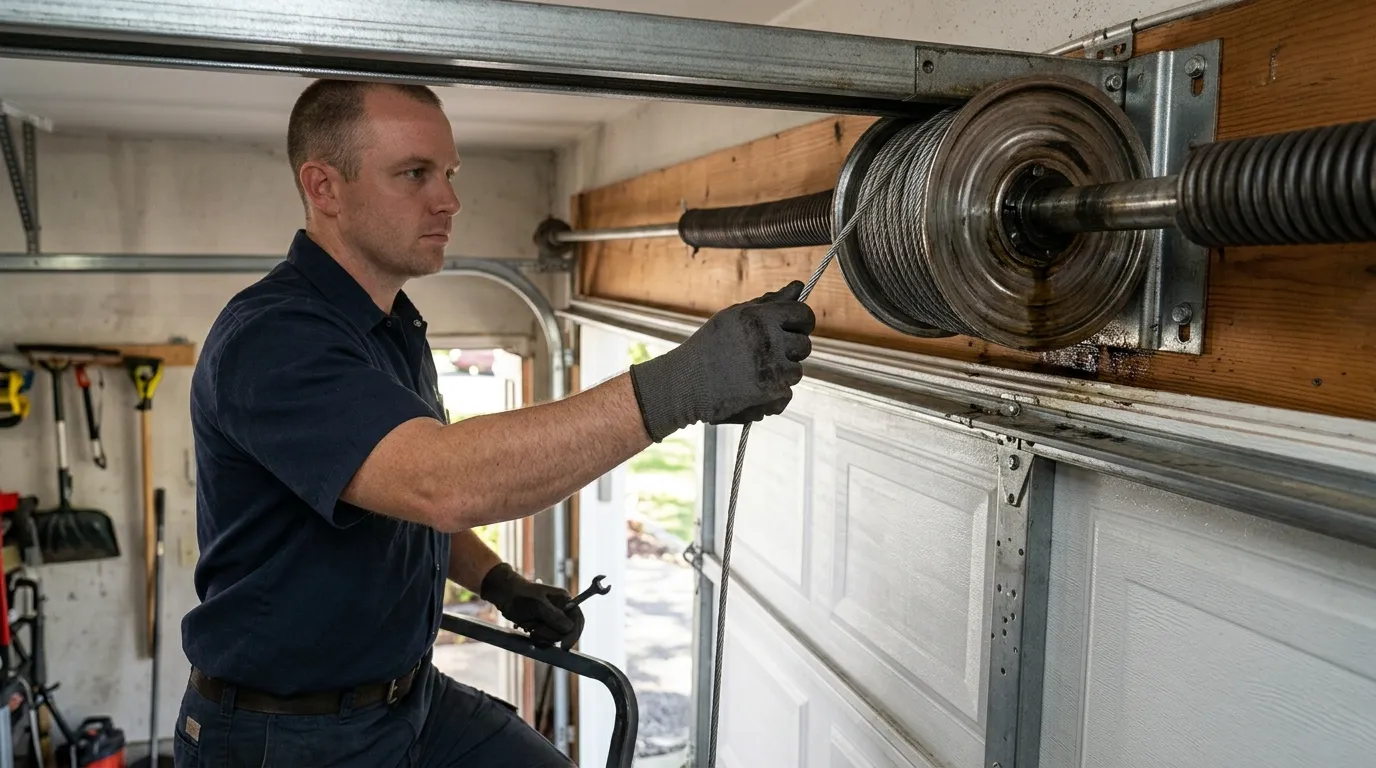
The mistake we see most is fixing the symptom and leaving the cause. A homeowner calls about a noisy door, we replace the rollers, and six months later they're calling about a bent track - because the real issue was a spring sized for a door that's twenty pounds lighter than it used to be after years of panel sag and warping. On a door from the 1980s or early 1990s, that kind of cascading repair is common enough that it's worth asking upfront: are we fixing this door, or are we financing its retirement one part at a time?
The other version of this mistake is the opposite - replacing a door that didn't need it. A door from this era with straight panels and intact seams can often run another decade with a new spring and a properly balanced track. Age alone isn't the deciding factor. Heat damage to the panel itself is. If the steel skin is still flat and the seams haven't separated, that's a door worth putting money into.
What You Pay
We don't have a set price to quote here without seeing the door - torsion spring jobs, track realignment, and full replacements land in different ranges depending on the door size and what's actually failed. What we can tell you is how to think about the decision given the local housing stock: with median household income in this area at $65,781, a full replacement is a real expense, not a small one, and it's worth making sure repair is actually off the table before you commit to it.
Across the 23,164 owner-occupied houses in this service area, a good share are still running the door that came with the house. For those, a spring and hardware repair is almost always the cheaper first move, and often the right one. Replacement makes more sense when the panels themselves have heat-warped or the track has been bent enough times that it won't hold alignment anymore.
The Situation
Here's the honest version. If your door is from that 1974-2003 build window, has straight panels, and the problem is a spring, a cable, or a roller, it's worth fixing - that repair buys you real years, not a temporary patch. If the panels are visibly bowed from heat or the bottom corners have started to separate, you're past the point where repair is the cheaper option long-term, even if it's cheaper today.
One limitation we're upfront about: we can't tell you which one it is without looking at the door in person. Heat warping isn't always visible from the driveway, and a track that looks fine can be a quarter-inch out of plumb in a way that's already stressing the opener. That's not a sales pitch, it's just where the guesswork runs out and a look at the actual door has to take over.
How it works
From “it’s stuck” to “it’s fixed”
01
Tell us what’s wrong
Describe the symptom - won’t open, loud bang, opener runs but the door won’t move.
02
On-site diagnosis
A technician tests the door under power and by hand and finds what actually failed.
03
Clear, up-front plan
You get the fix that’s needed and what drives the cost - before any work starts.
04
Repaired & tested
The repair is done, the door is set true and tested, and the work area left clean.
Serving Hanford, CA - tell us what your door’s doing and we’ll take it from there.
How old is too old for a garage door repair in Hanford?
Age by itself doesn't rule out a repair. A lot of Hanford houses have doors from the 1974-2003 building era, and a door from that window with straight, unwarped panels is often still worth fixing. What matters more is condition - whether the heat has warped the panel steel or the track has been bent past holding alignment.
Does Hanford's heat really affect garage doors that much?
Yes. Severe summer heat cycles work on thin steel panels until they bow, and they dry out grease in rollers and hinges faster than a milder climate would. On an original door from the early 1980s or 1990s, decades of that heat cycling is often the reason a panel or seam fails before the hardware does.
Is it cheaper to repair or replace an old door?
Repair - a spring, cable, or roller job - is almost always cheaper up front than full replacement. Given median household income in this area, that's the first option worth ruling in or out. Replacement only makes sense once the panels have heat-warped or the track won't hold alignment no matter how many times it's adjusted.
Ready to get your garage door sorted?
Tell us what it’s doing and where you are in Hanford - we’ll take it from there.