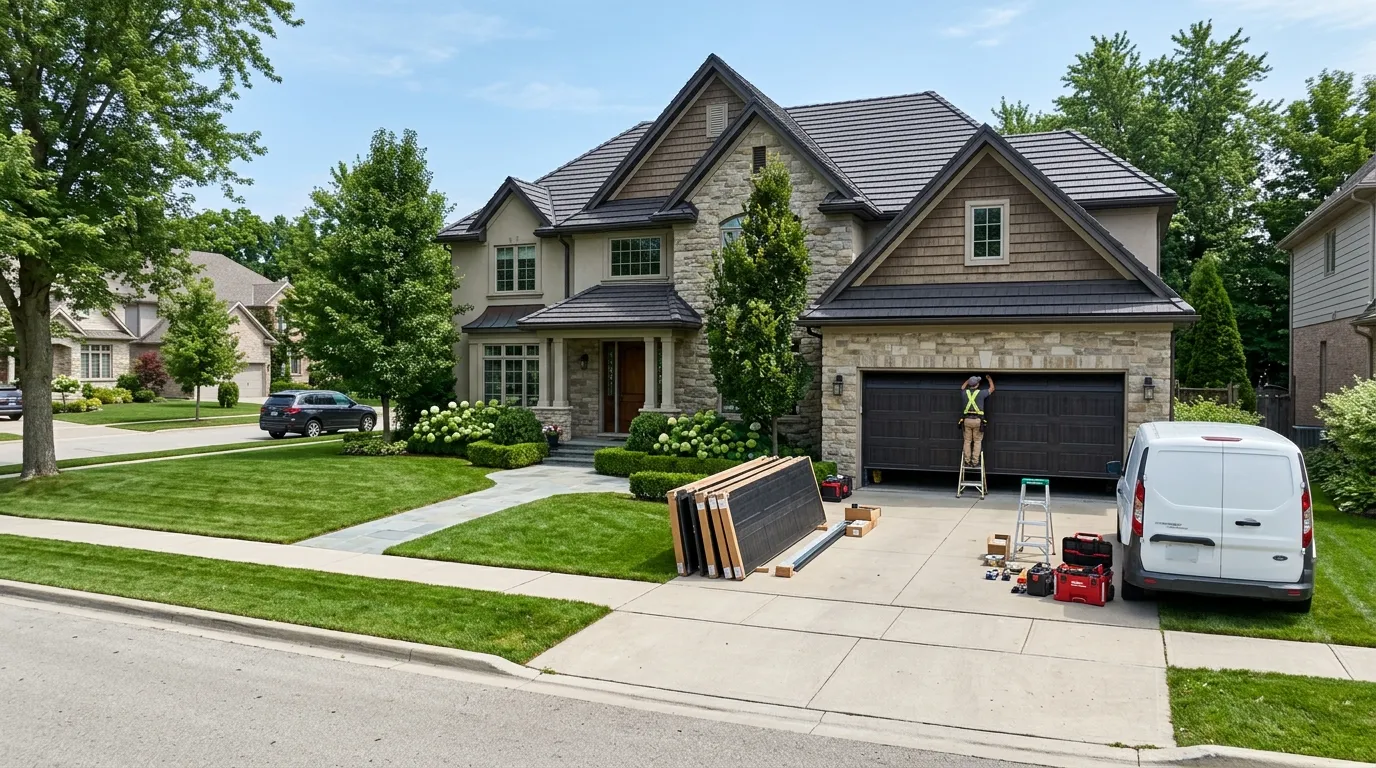
Garage door repair, spring, and opener service for Lemoore, CA homes built mostly in the early 1990s, serviced from Hanford Garage Door Pros, 8 miles out.
Lemoore's housing stock centers on 1991, which puts it later than a lot of the ground Hanford Garage Door Pros covers. Across the wider service area the build years run from 1974 to 2003 with a median around 1982, so Lemoore sits on the newer side of that range. That gap matters more than it sounds like it should. A door installed in the early 1990s is a different animal from one installed in the mid-1970s: different track width standards were common, different spring winding setups showed up on production doors, and steel gauge on the panels themselves shifted through that stretch. With roughly 9,039 households in this area and a median income near $82,189, we also see more owners who bought a mid-range steel door once and have kept the original opener running longer than most manufacturers expect. That combination - newer door, older opener - is the single most common call we get out here. It's not a Hanford call. It's a Lemoore call.
What We Will Not Take On
We won't quote a same-day fix sight unseen on a job that turns out to need a full track realignment on a door that's been forced off its rollers - that's a look-first job, not a phone-quote job. We also don't stock every OEM opener logic board for units from the early '90s; if your opener is original to a 1991-era build and the board has failed, we may need to order the part, and that can add a day or two to the timeline. And we won't push a spring swap on a door where the real problem is a bent track or a section warped from heat - fixing the spring on a door with a structural problem just means a second service call. Being 8 miles from our Hanford base, we also don't offer walk-in same-hour visits the way a shop physically inside Lemoore could. We schedule the run, we come out, and we do the job right, but we're honest that we're traveling to get there rather than already parked on your street.
Old Streets and New Ones
Not every block in Lemoore was built at the same time, and the 1991 median is an average, not a rule. Some of the older sections closer to town carry doors and hardware that lean toward the earlier end of the region's 1974-2003 range, with the lighter-gauge panels and older extension-spring setups that came standard before torsion systems took over as the default. Newer sections built out through the late '90s and into the 2000s carry heavier insulated panels, torsion springs as standard, and openers with safety-reversal sensors built in from day one - features that simply weren't code or common practice on the earlier stock. When we get a call, one of the first things we ask is roughly when the house went up, because it tells us more about what's likely wrong than the symptom description usually does.
What the Housing Means for Your Door
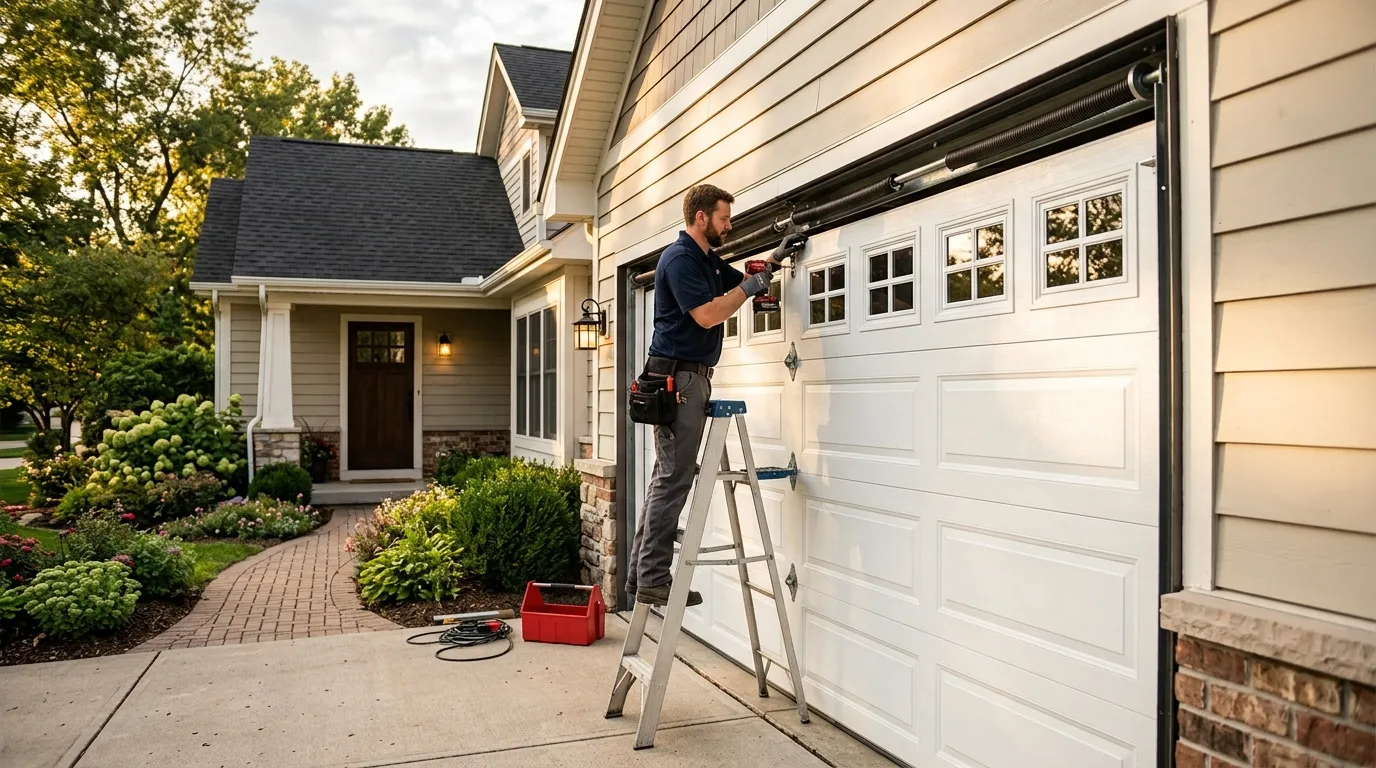
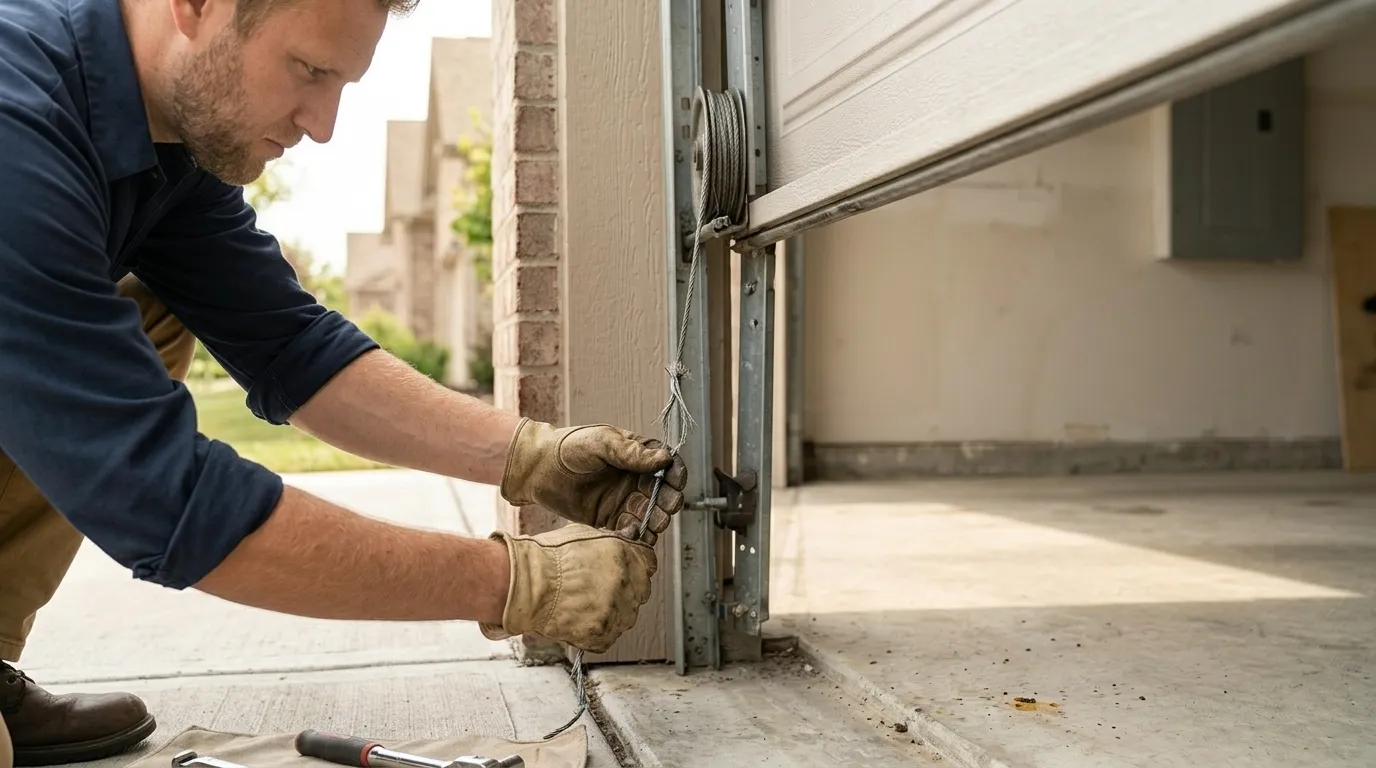
Lemoore sits in a severe-heat climate band, and that has a real effect on garage door hardware regardless of the build year. Steel panels expand and contract through the day, nylon rollers and plastic idler bearings dry out and crack faster under sustained heat, and torsion springs cycle through more temperature swings per year than they would somewhere milder. On a door from the early 1990s, that's often 30-plus years of heat cycling on the original spring - and torsion springs are rated for cycles, not calendar years, so heat exposure shortens the useful life you actually get. If your door is starting to sag on one side, or the opener strains and reverses on hot afternoons, that's usually heat-driven wear on original-era hardware, not a fluke. Given the area's median income, most owners here are choosing repair over full replacement when the door itself is sound - it's usually the spring, the rollers, or the opener logic that's given out, not the panel.
How it works
From “it’s stuck” to “it’s fixed”
01
Tell us what’s wrong
Describe the symptom - won’t open, loud bang, opener runs but the door won’t move.
02
On-site diagnosis
A technician tests the door under power and by hand and finds what actually failed.
03
Clear, up-front plan
You get the fix that’s needed and what drives the cost - before any work starts.
04
Repaired & tested
The repair is done, the door is set true and tested, and the work area left clean.
Serving Hanford, CA - tell us what your door’s doing and we’ll take it from there.
About 8 miles. We run trucks out to Lemoore regularly as part of our coverage area, but because we're based in Hanford rather than parked in Lemoore itself, we schedule the visit rather than offering an instant walk-up appointment.
My house was built in the early '90s - does that matter for a spring repair?
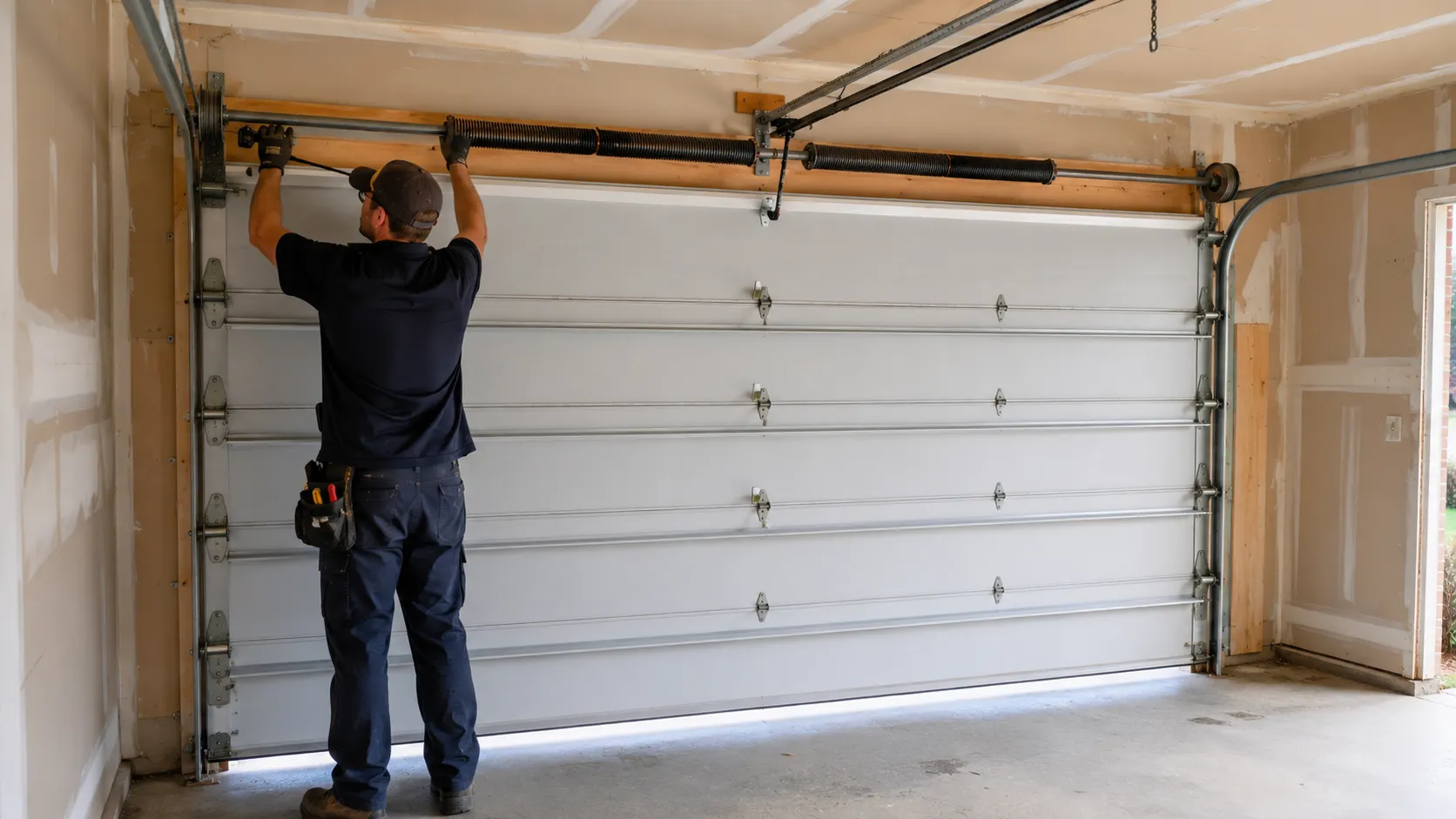
Yes. A door from around 1991 almost always has torsion spring hardware as standard rather than the older extension-spring setups common on earlier houses in this region, so the repair, the spring size, and the winding method are different. Telling us roughly when your house was built helps us bring the right parts the first time.
Why does my opener from the '90s keep failing in summer?
This area sits in a severe-heat climate band, and heat cycling wears out plastic gears, capacitors, and sensor wiring inside older opener units faster than mild climates do. If your opener is original to the house, summer strain is often the tipping point after decades of heat exposure, not a sudden defect.
Do you carry parts for older doors on the spot?
For common torsion springs and rollers, usually yes. For an original logic board or a specific OEM part on an opener from the early 1990s, we may need to order it, which can add a day or two. We'll tell you upfront if that's the case rather than guess.
Ready to get your garage door sorted?
Tell us what it’s doing and where you are in Hanford - we’ll take it from there.